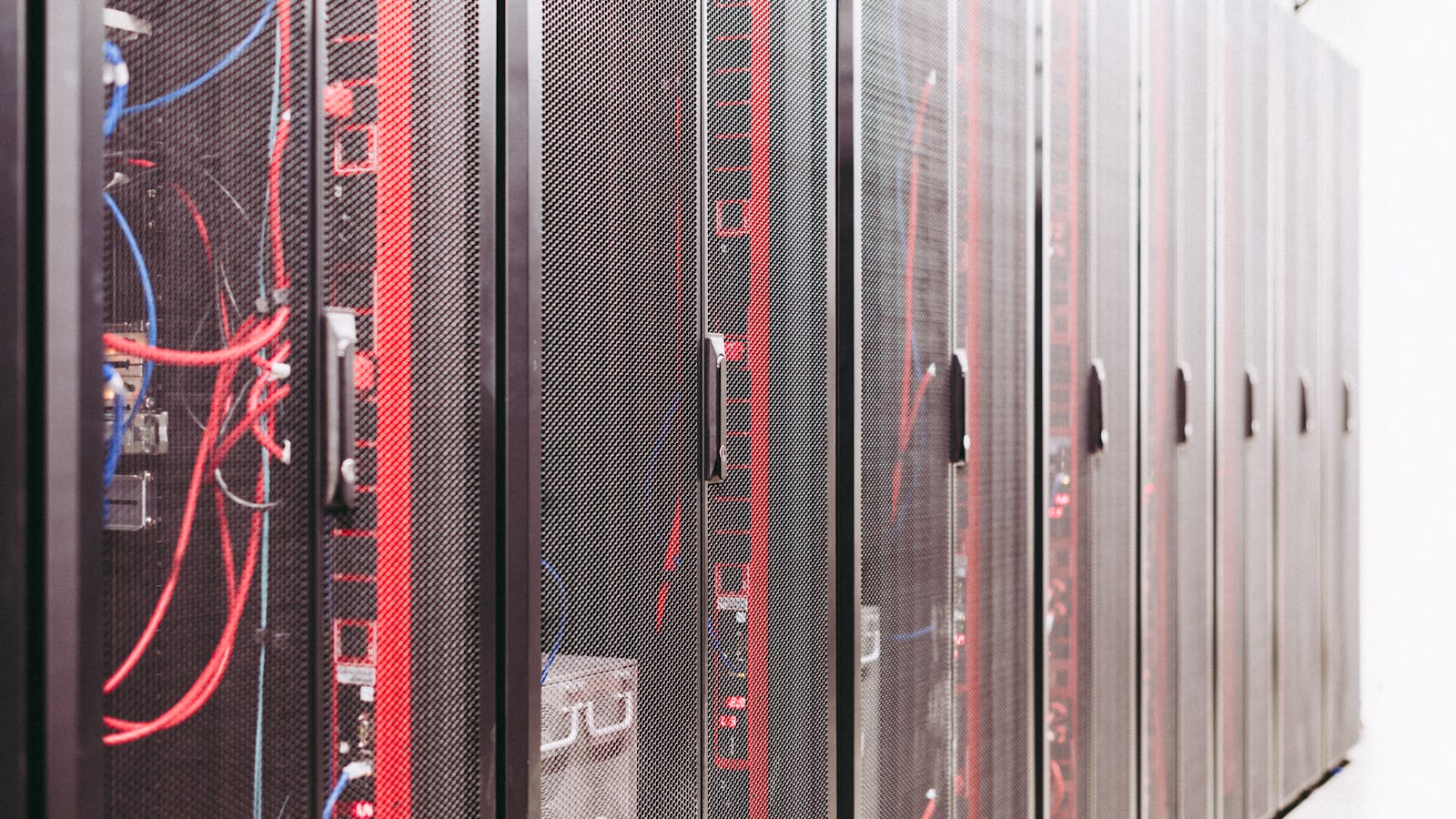
Investors are pouring money into Nigerian data centres on a bet about the next 25 years, not the next quarter. The biggest risk to that bet is electricity.
Nigeria’s data-centre market, worth roughly $288 million in 2025, could pass $1 billion by 2031 as operators race to add capacity in Lagos and other hubs, according to the African Energy Chamber. The industry group argues the boom rests on a constraint the country has never fully solved: reliable power.
A demographics bet
Nigeria is already home to more than 240 million people, and the United Nations projects it could pass 400 million by 2050, making it the world’s third most populous country after India and China. With a median age of around 18 and internet penetration above 50%, a young, mobile-first population is entering the digital economy each year.
That trajectory is reshaping the long-term case for cloud computing, AI services, fintech, streaming and sovereign data storage. Operators, including Equinix, MTN, Rack Centre, and Open Access Data Centres, are scaling colocation and cloud capacity, and in 2025, MTN announced a more than $240 million investment in a new Lagos facility built for AI and cloud demand. The chamber estimates that broader data-centre investment in Nigeria is at close to $1 billion.
Power is the catch
AI workloads run at far higher rack densities than traditional cloud services, drawing much more electricity. Nigeria’s grid remains unreliable, and operators lean heavily on backup generation and hybrid power systems to keep facilities running.
“Data centres are becoming critical infrastructure for Africa’s economic future, but none of this growth happens without energy,” said NJ Ayuk, executive chairman of the African Energy Chamber. “Countries like Nigeria are seeing rising demand because of demographics, connectivity and digital adoption, but investors also need confidence that long-term power supply can support that expansion.”
Could gas be the bridge?
Globally, the AI race has become an energy race. Microsoft, Amazon, Google and Oracle are signing long-term power agreements and financing generation to feed hyperscale data centres. The chamber points to US deals as a template: Google committing 2.7 GW of capacity for a major AI project, and an agreement involving Microsoft, Chevron and Engine No. 1 to build 2.5 GW of gas-fired generation in Texas.
Its argument is that Nigeria’s underused gas could find a major new customer in AI data centres, much as it has begun to in the United States, turning a domestic resource into the power source for digital infrastructure.
Why it matters
For Nigeria, keeping data and the value it generates onshore is increasingly treated as strategic, adding to the push to build capacity locally rather than route workloads abroad. That build-out also relies on subsea cables and peering networks that carry the data.
The case is made by the African Energy Chamber, which convenes the sector and has an interest in tying data-centre demand to the gas industry, and the market projections are its own. Power reform, regulatory clarity and connectivity will determine how much of the projected boom actually arrives. The demand is not in doubt; whether Nigeria can keep the lights on for it is the open question.



Leave a Reply