When a country’s communications minister turns up at an energy conference, the interesting question is not what he will say. It is why the invitation makes sense.
Solly Malatsi, South Africa’s Minister of Communications and Digital Technologies, has been confirmed as a speaker at African Energy Week 2026 in Cape Town, South Africa, the African Energy Chamber said on 3 September 2026. The chamber is framing his appearance around data centres, artificial intelligence and the power they need.
That framing is the story. South Africa’s computing build-out has reached the point where the binding constraint is no longer connectivity or capital. It is megawatts.
The numbers the organiser is citing
The chamber puts more than 58 commercial data centres in operation across South Africa, and describes Microsoft as expanding its local cloud and AI footprint through a R5.4 billion investment by 2027, with Amazon Web Services working through a R30.4 billion multi-year commitment.
These are the organiser’s figures rather than ours, and an event promoter has an obvious interest in a large number. They are consistent in direction with what operators have been building, but readers should treat the specific rands as claims rather than audited totals.
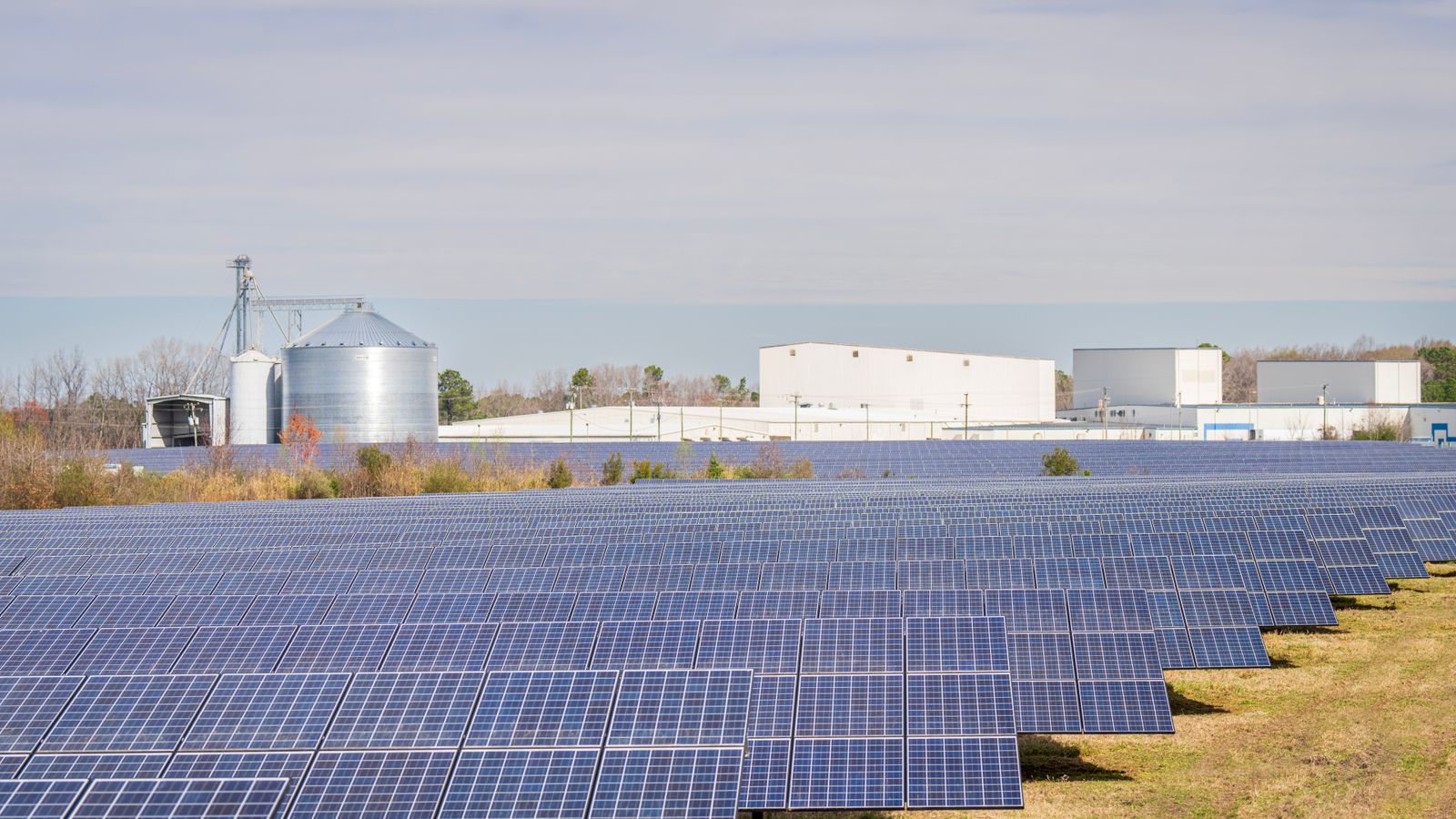
The chamber also points to generation being built specifically to serve compute: a 120 MW solar facility from Teraco in the Free State, and a 10 MW solar project supporting Amazon’s Cape Town operations, alongside growing use of electricity wheeling to move power to high-load sites. On the network side it cites MTN and Cell C expanding AI-enabled infrastructure and national coverage.
Generation is becoming part of the data centre spec
That last detail is the substantive shift. A colocation operator commissioning its own solar plant is not buying green credentials; it is buying certainty of supply, because a grid connection alone no longer guarantees the load an AI hall draws.
The pattern is visible across the market. The 400-GPU cluster announced for a South African facility last week named power density and cooling, not chip supply, as the problems it had to solve, and operators have been specifying higher-density power and cooling equipment ahead of the hardware arriving.
“Investment in infrastructure and reliable energy will be essential to realising this potential,” said NJ Ayuk, executive chairman of the African Energy Chamber.
One claim worth checking
The announcement also states that the Independent Communications Authority of South Africa allocated the entire 6 GHz band to international mobile telecommunications use in a July 2026 national radio frequency plan.
We could not confirm that against ICASA’s published material, and it would be a consequential decision: the 6 GHz band is contested between licensed mobile use and unlicensed Wi-Fi, and awarding all of it to one side would be a significant call. Our reporting on the regulator’s mobile spectrum roadmap to 2030 does not cover it. Treat it as the chamber’s characterisation until ICASA says otherwise.
Malatsi’s own department has not commented on the appearance. What it signals is straightforward enough: the ministry that licenses spectrum now has a seat at the table where power is allocated.


Leave a Reply