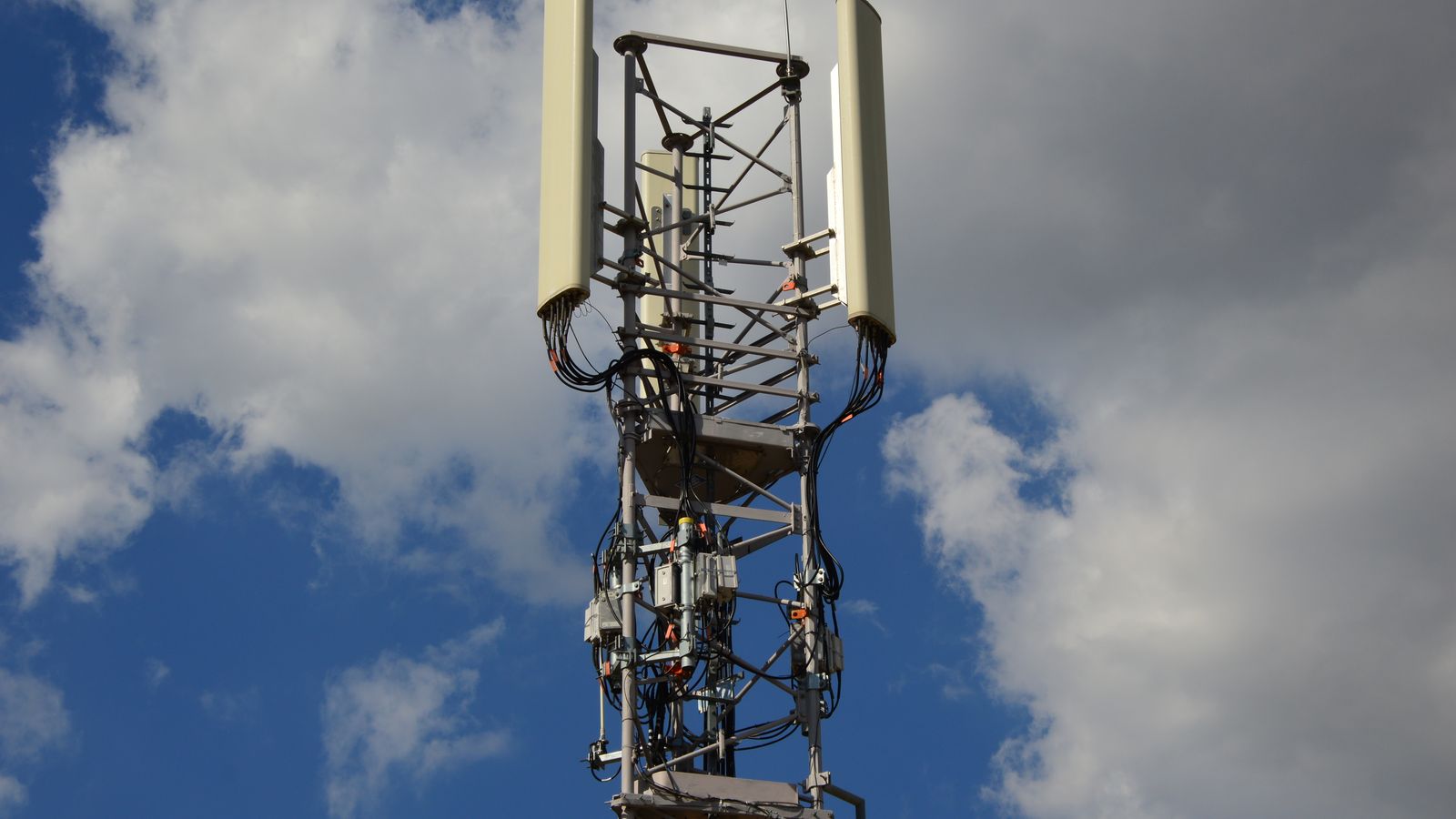
Vodacom South Africa says it can now add 4G and 5G capacity at mast sites with no room left for more equipment, using a single compact antenna that runs Massive MIMO on 2 spectrum bands.
The operator said on 29 September 2026 that it had piloted an integrated passive-active Massive MIMO (multiple-input, multiple-output) solution with Nokia in the Western Cape, and would now deploy it at “identified sites” on its existing network where more capacity is needed. It did not say how many sites, over what period, or how much capacity the pilot added.
What Vodacom tested
Massive MIMO uses large arrays of antenna elements to serve many users at once on the same spectrum. The solution Vodacom piloted runs it across the 2600 MHz and 3500 MHz bands and combines several antenna functions in one compact unit, so it can go on towers and rooftops where space or existing structures rule out conventional expansion.
“As demand for mobile data continues to grow, we need to continuously evolve our network to deliver the quality and consistency of experience our customers expect,” said Beverly Ngwenya, technology director at Vodacom South Africa.
Vodacom says the benefit is greatest in high-demand urban areas, where physical space is limited and conventional network expansion is more complex. Vodacom says it also lets it use its spectrum more efficiently. Further mobile bands are set out in ICASA’s spectrum roadmap to 2030.
What the “world first” covers
Vodacom calls the solution a world first. The integrated passive-active design itself is not new: antenna maker RFS and Nokia launched one in March 2023, but its first version carried Massive MIMO in a single band, 3.5 GHz, alongside a passive module for the lower bands.
Vodacom’s claim rests on running Massive MIMO in 2 bands within the same compact unit. It did not name the product.
Massive MIMO itself is not new to Vodacom. The group deployed it in 2018, when it launched a commercial 5G service in Lesotho and a trial 5G network in South Africa, both on 3.5 GHz.




Leave a Reply