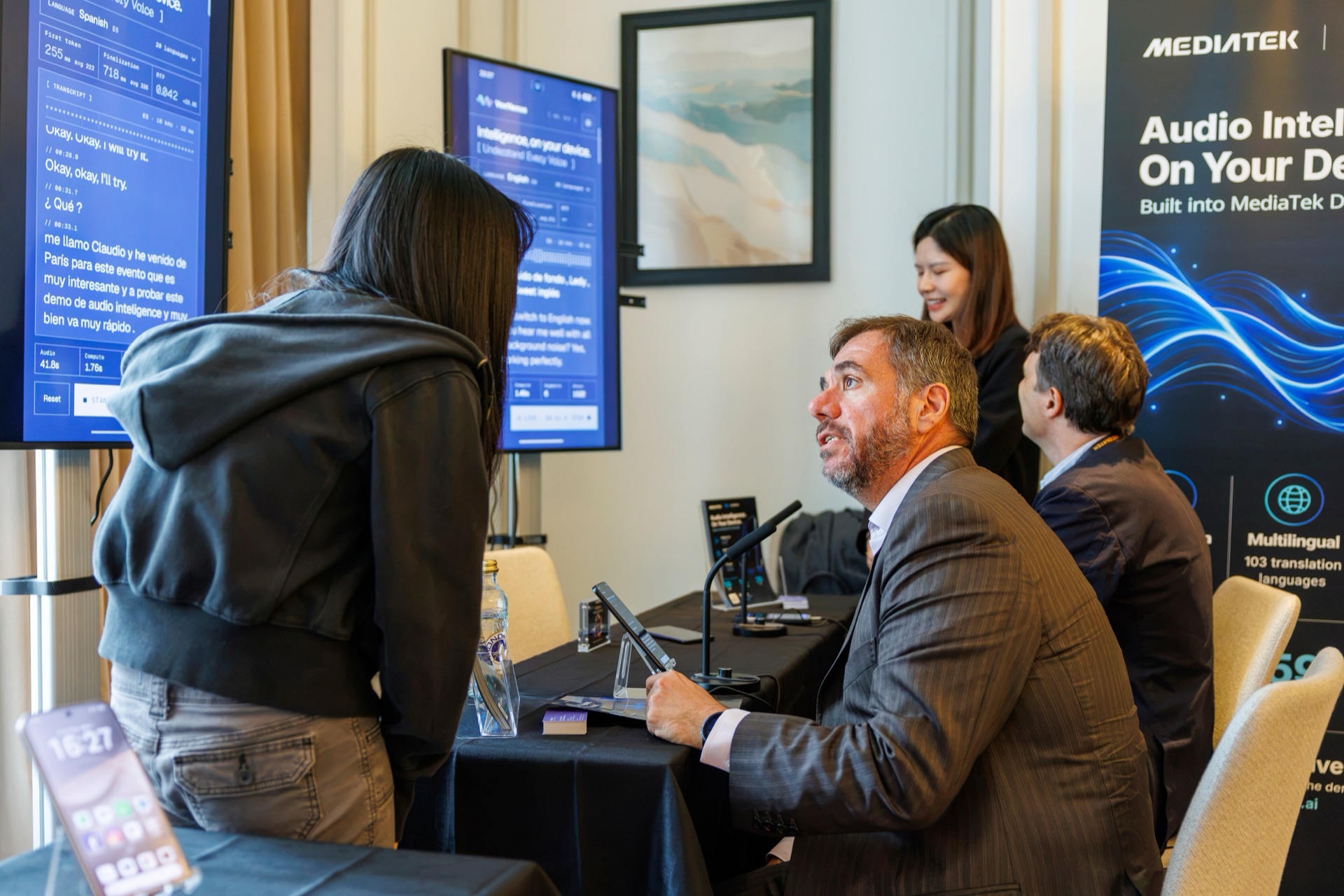
A voice AI model small enough to run on a budget Android phone, with no internet connection and no per-query fee, is the claim behind a new release from VoxNexus.
The Singapore-based company said on 23 October 2026 that it has released VoxEdge, an on-device voice stack for speech recognition, translation and speech synthesis. The announcement was issued from Madrid, Spain, through APO Group.
What VoxEdge covers
VoxNexus said VoxEdge supports speech recognition in 36 languages, translation in 103 languages and speech synthesis in 45 languages. The release headline promises 100-plus languages and names Swahili, Hausa and Yorùbá, but it does not list which African languages are covered for each function.
Once the model is installed, every query is free, the company said, because it sends nothing to the cloud. VoxNexus also launched VoxSense, an always-on listening tool that it says uses 162 mAh over 12 hours, about 2.5% of a 6,500 mAh battery. Developers and device makers can license both through an SDK, and a free trial is available.
Claims that need testing
VoxNexus said its speech recognition model has as few as 65 million parameters and a lower word error rate than open-source models nearly 10 times its size. The release names no benchmark, test set or comparison models, so the claim cannot be checked from the announcement.
Charles Shi, CEO of VoxNexus, said under-resourced languages aren’t small. “Hundreds of millions of people speak them. Until now, AI models just haven’t learned them yet.”
The company said it unveiled the tools at the MediaTek Dimensity 9600 launch in Madrid on 19 October 2026. A live demonstration there transcribed Spanish and English conversations on the phone in real time, with no cloud connection. The African languages in the headline were not part of the demonstration described in the release.
What the release does not say
It names no phones, chipsets, prices or African customers, and gives no accuracy figures for any individual language. It does not say whether the African languages work as well as the demonstrated ones.
Scarce data has held back speech technology for African languages. A Google Research and Zindi challenge on Lingala and Shona in September 2026 showed how little existing systems understand, and AethexAI raised $3 million in June for voice AI built for low-bandwidth African networks. VoxNexus is pitching offline, on-device processing as the way around both data and connectivity limits.




Leave a Reply