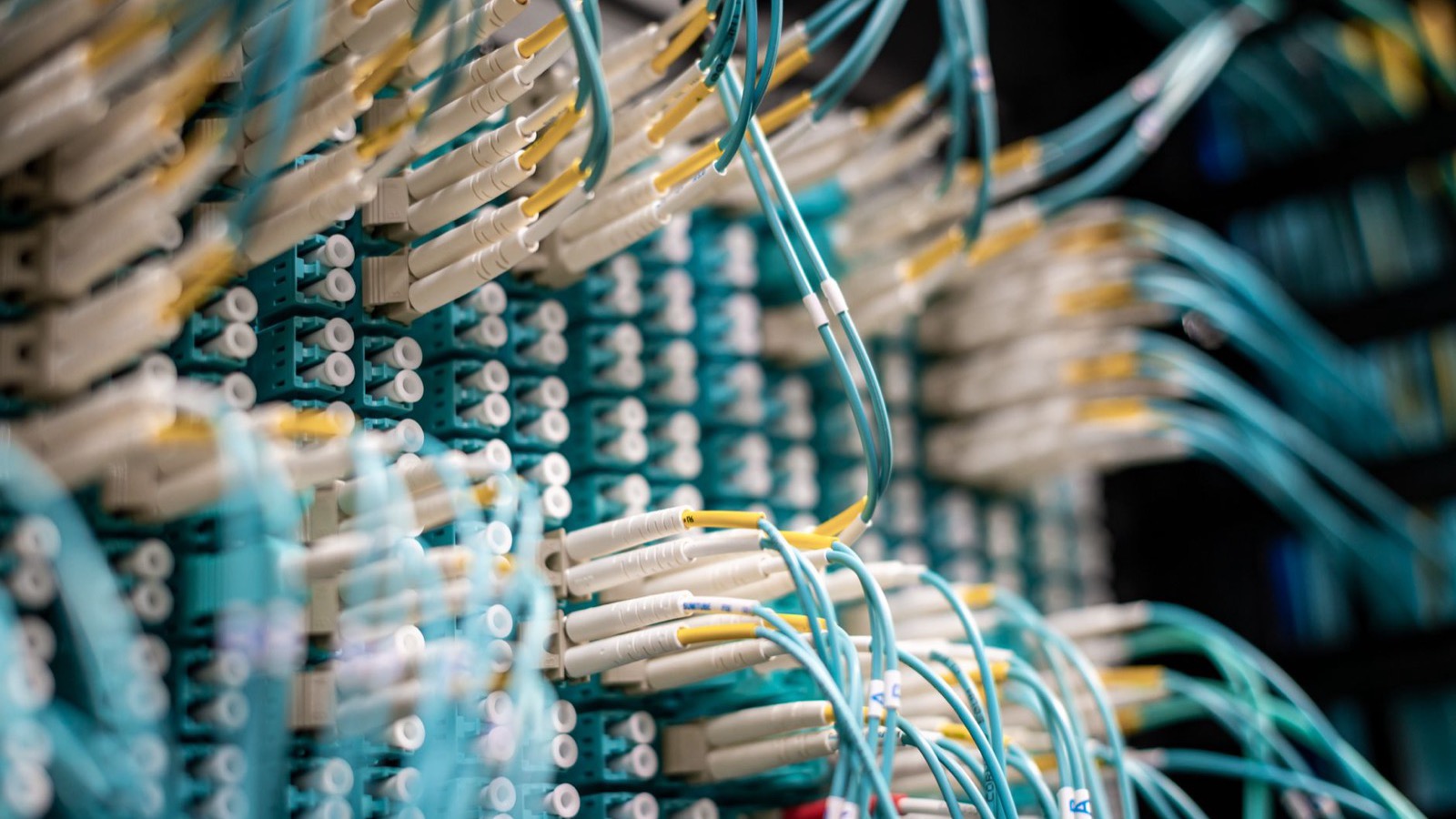
The cable that first brought international fibre to Gambia, Guinea, Liberia, Mauritania, Sierra Leone, Equatorial Guinea and Sao Tome & Principe is being upgraded without laying a new cable.
The Africa Coast to Europe consortium said on 21 September 2026 that it had selected Ciena to upgrade the system, using the vendor’s 6500 platform with WaveLogic 6 Extreme optics to deliver more than 30 Tb/s across a route linking Western Europe, West Africa and South Africa.
The work goes onto ACE’s existing submarine line terminal equipment, the kit at each landing station that lights the fibre. That is the point: capacity rises without the expense of laying cable, and Ciena says it reduces the need for the complex traffic migrations that usually accompany an upgrade on a live system.
What ACE is
ACE runs about 17,000km from Penmarch in France down the west coast of Africa to Duynefontein in South Africa, and it is one of the few systems that serves the smaller coastal markets rather than only the large ones. It went into service on 15 December 2012, cost around $700 million, with World Bank support for some consortium members, and was built by Alcatel Submarine Networks.
The consortium serves more than 500 million people across 20 countries, including Mali and Niger via onward land links. Ciena lists 18 landing stations, while ACE’s site lists 19, including Dakar, Abidjan, Accra, Lagos, Libreville, and Kribi.
“International routes drive economic growth, digital inclusion, and cloud adoption across Africa, and this upgrade gives regional service providers a high-capacity path that reaches more than 500 million people,” said Philippe Recco, president of the ACE management committee.
How big an increase is not disclosed
Neither the consortium nor Ciena has said what ACE carried before the upgrade, so the 30 Tb/s figure sits without a baseline to measure it against. ACE’s public material advertises access at 100 Gbps rather than system capacity, and the announcement gives no completion date or breakdown by landing station.
What can be said is that the gain arrives on infrastructure already in the water, across a stretch of coast where capacity has constrained wholesale prices for a decade.
Capacity is not the same as resilience
More bandwidth on one cable does nothing for the region’s real exposure: how few paths there are. West African traffic funnels through a handful of landing stations, and cuts near Côte d’Ivoire in March 2024 and again in June 2026 took out connectivity well beyond the countries where the damage occurred.
Elsewhere, the response has been to add routes rather than enlarge them. CSquared activated capacity on 2Africa West in July 2026 specifically to give operators another way in and out of the region, and EllaLink landed a 670km branch in Mauritania in May. Nigeria’s newest landing, at Qua Iboe, remains the country’s only one outside Lagos.
A bigger ACE is still worth having, particularly for the small markets where it remains the first and sometimes the only international system. Whether operators there see it in wholesale prices depends on consortium members reselling the new capacity, which the announcement does not address.


Leave a Reply