
Airtel Uganda customers can now send messages from places with no mobile signal through Starlink’s satellites. The service went live on 24 September 2026, and Airtel says Uganda is the second African market to get it, after the Democratic Republic of Congo in August.
In January, Starlink was not licensed in Uganda.
Airtel is selling it as Airtel Starlink. Customers opt in through the MyAirtel app, get a free 30-day trial, then pay through eligible Airtel Uganda data bundles. It works only on supported Android phones for now, needs a clear view of the sky, and requires no dish or separate device.
Airtel is pitching it to transport and logistics operators, humanitarian organisations, farmers, and mining operations, and to keep people reachable during emergencies and network outages. “Starlink’s advanced satellite technology complements our ongoing investments in terrestrial infrastructure,” said Soumendra Sahu, Airtel Uganda’s managing director.
Texts and app messages first, calls in 2028
The service is narrower than the name suggests. Airtel lists SMS and light-data applications such as WhatsApp messaging, carried by a constellation of 650 satellites. Sunil Taldar, Airtel Africa’s chief executive, told investors on 23 July 2026 that the first generation of the service carries text messages and calling on certain apps, and that ordinary voice calls arrive with the second generation, which he put at 2028 and beyond.
A phone connects to the satellite when it leaves Airtel’s terrestrial coverage and returns to the ground network when it comes back into range. “The satellite operator relies on our spectrum,” Taldar said, and Airtel handles the customer relationship from sign-up onwards.
From unlicensed to live in under 9 months
On 6 January 2026, the Uganda Communications Commission said Starlink had not been licensed because it had not met the requirements it set when the company first approached Uganda. It also said Starlink terminals were being imported and used illegally, and that Starlink had committed to technical controls to stop its signal spilling into the country.
By May, Starlink held a provisional infrastructure and service licence. Among its conditions, the regulator said, is a national gateway with a physical point of presence in Uganda, through which traffic for Ugandan users must route. The commission’s published statements do not say how that condition applies to satellite-to-phone traffic carried on an operator’s spectrum.
At the launch, the regulator’s executive director, Nyombi Thembo, tied the service to an obligation the operators already carry. “As part of Telecoms’ licensing obligations, Uganda’s mobile operators are required to achieve coverage across at least 90% of the country’s geographical area,” he said. “This includes challenging terrains such as islands, mountainous regions, forests and other hard-to-reach areas.”
The ICT minister, Justine Kasule Lumumba, presented it as the government’s policy at work, saying its role was “building an enabling policy environment to support private sector growth in ICT”.
Two days before, the commission’s director of engineering, Bogere Joseph Alfred, wrote that direct-to-device services “will inevitably prompt fresh debates over coverage and universal service obligations”, and that the spectrum they depend on is already heavily used in cities such as Kampala.
Two markets of 14
Uganda is part of a wider rollout. Airtel Africa agreed on 16 December 2025 to bring the service to all 14 of its markets, which then served 173.8 million customers, with each launch subject to national regulatory approval. Airtel switched it on in the Democratic Republic of Congo in August, and Uganda is the second.
Direct-to-phone is one part of a three-part agreement with SpaceX, Taldar told investors. The others are satellite internet for enterprise customers where fibre does not pay, and satellite backhaul for remote sites, which Airtel has already begun using at what he called “a significantly lower cost”.
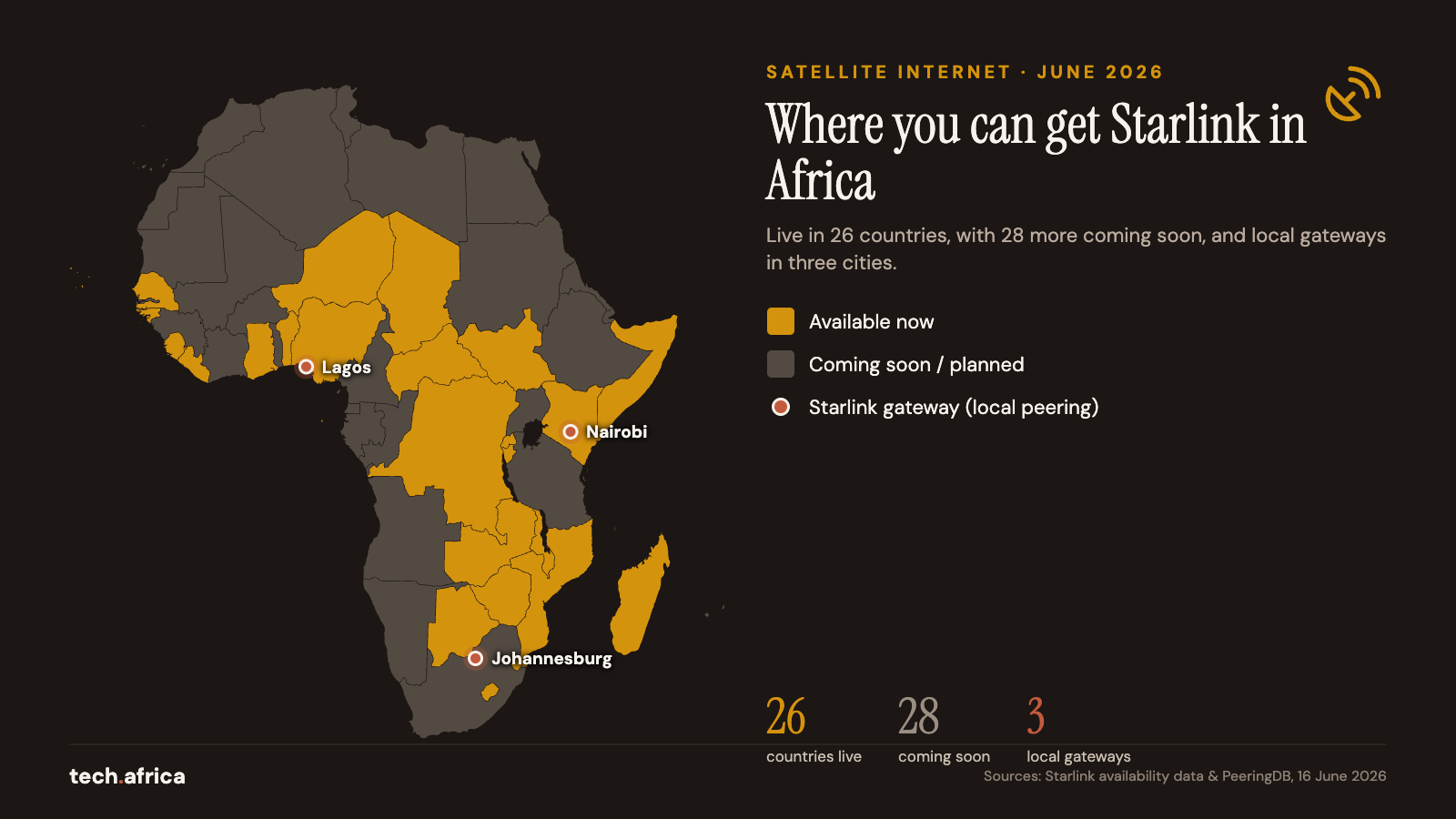
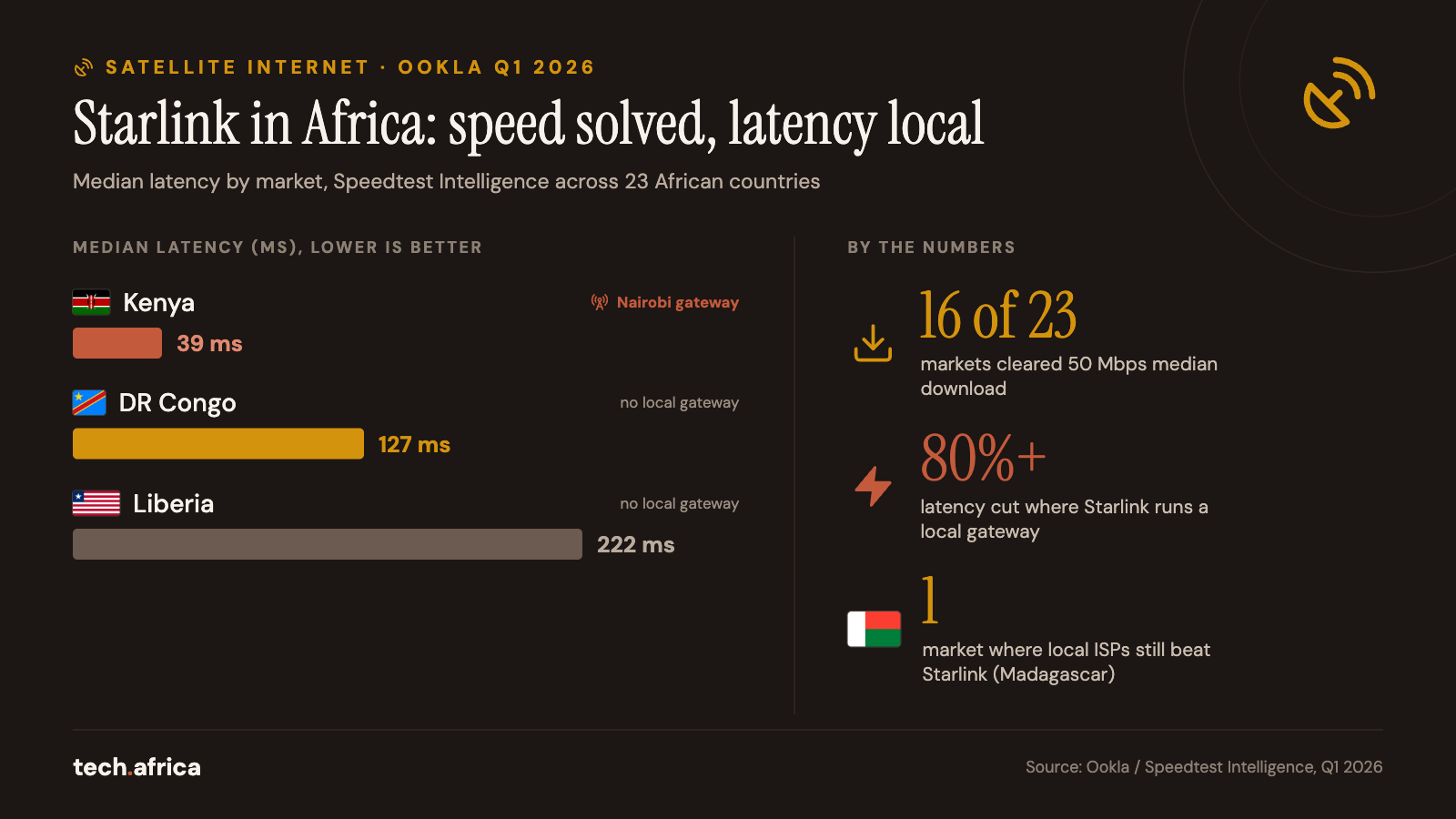
Its rivals are testing the same idea. MTN Zambia trialled Starlink’s direct-to-cell service in March, and Vodafone has signed with Amazon Leo to extend coverage across Africa. Starlink’s broadband service, meanwhile, already outpaces local ISPs across Africa on speed, Ookla found in June.
For now, the Ugandan service is a way to stay reachable off the grid, not a replacement for it. Whether it becomes more depends on the second-generation satellites, and on how regulators across Airtel’s other 12 markets answer the questions Uganda has only just started to ask.

Leave a Reply