DE-CIX and Cabo Verde Telecom (CVTelecom) want to give traffic between Southern Europe, West Africa and Latin America a more direct path across the South Atlantic, and reduce its dependence on hubs in Northern Europe and North America.
The Frankfurt-based internet exchange operator and the Cape Verdean telecoms provider said on 29 September 2026 that they had signed a letter of intent to explore an interconnection corridor linking Lisbon, Portugal, with São Paulo, Brazil. The letter is non-binding, and the scope, technical design and commercial terms are still to be settled in a definitive agreement.
What each side brings
The plan is a swap. CVTelecom would provide dedicated transport capacity between Lisbon and São Paulo. In return, it would gain access to DE-CIX services in Frankfurt, Madrid, Marseille, New York and São Paulo, where networks meet to exchange traffic directly.
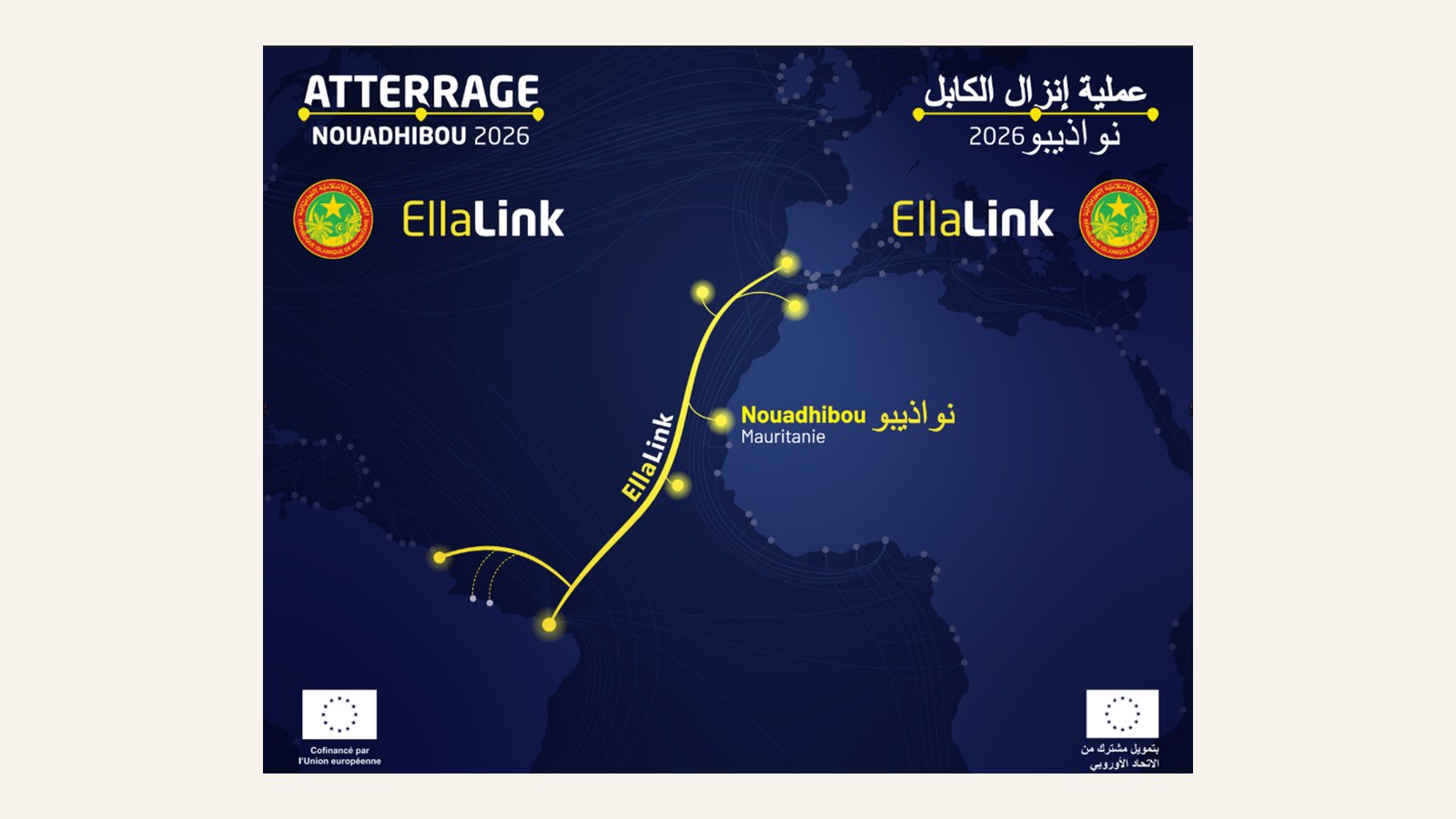
CVTelecom lists EllaLink, SHARE and WACS among the subsea cable systems behind its international connectivity, and runs a carrier-neutral data centre in Cape Verde. EllaLink’s main trunk links Sines in Portugal with Brazil, and in May 2026 the operator landed a branch in Mauritania.
“Digital growth increasingly depends on resilient, diverse, and geographically distributed connectivity,” said Theresa Bobis, head of emerging wholesale markets at DE-CIX.
Isa Neves, chief marketing officer of CVTelecom, said the partnership was “an important step in strengthening Cape Verde’s position as a strategic digital gateway between Africa, Europe, and the Americas”.
Why the route matters
The companies pitch the corridor at network operators, internet service providers, content and cloud providers, and enterprises that need resilient links across the South Atlantic. Route diversity has become a recurring theme for West Africa, where damage to a single cable system can ripple across borders.
For DE-CIX, it extends a push into the southern hemisphere that began with its first internet exchanges in Brazil. One detail stands out: the corridor starts in Lisbon, where DE-CIX runs an exchange it markets as a European gateway for West African and South American networks, yet Lisbon is not among the DE-CIX locations named in the arrangement.
Whether the corridor is built depends on the definitive agreement, and neither company has given a date.

Leave a Reply