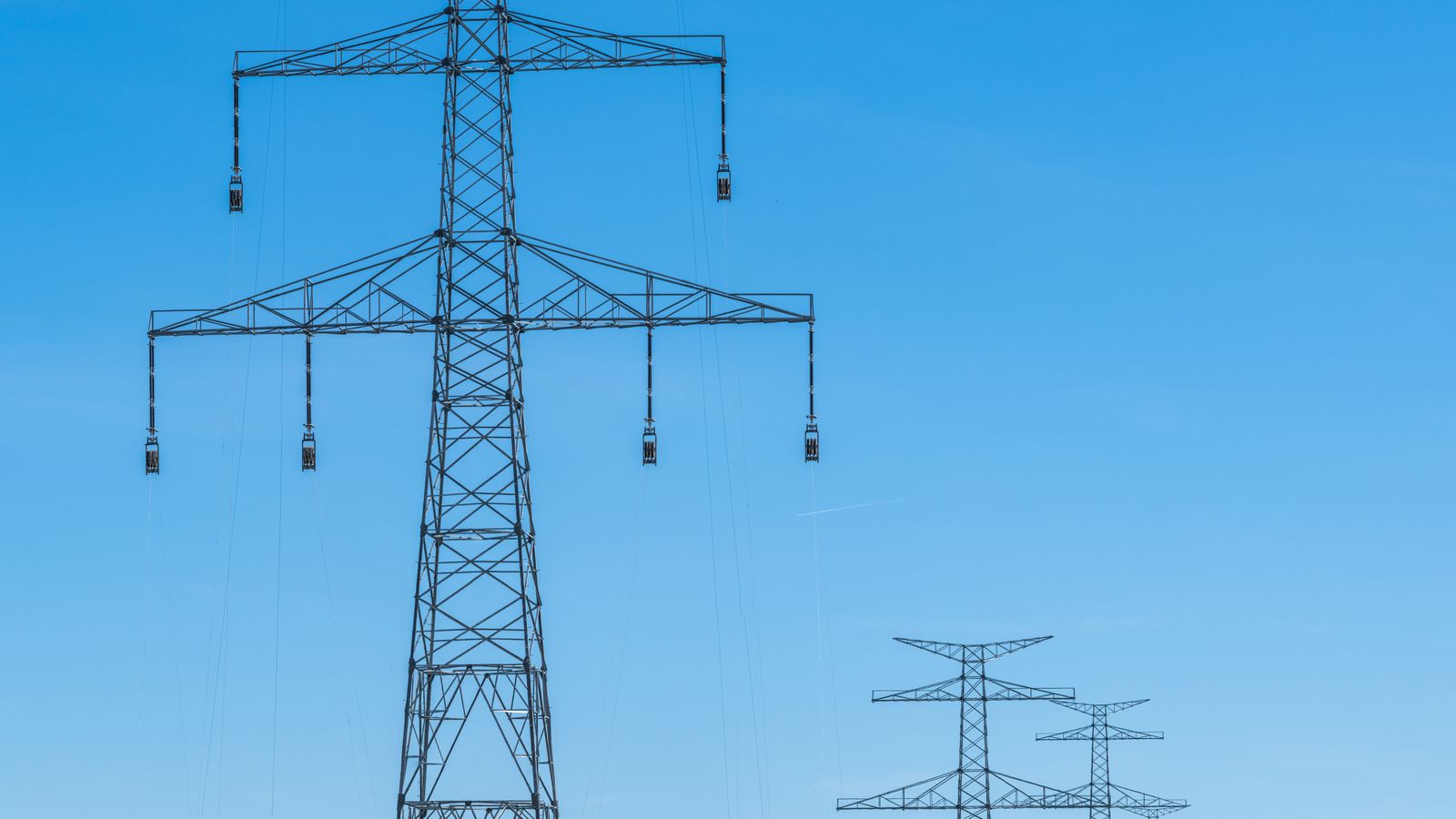
Every announcement about African AI compute eventually runs into the same wall. The servers are procurable, the buildings are financeable, and the electricity to run them has to cross a grid that was not built for this.
South Africa’s answer is a transmission programme that the African Energy Chamber puts at R440 billion and 14,500 km of new lines, to be run by the National Transmission Company of South Africa. The chamber disclosed the figures on 26 August 2026 while announcing that NTCSA chief engineer Popi Mfapa will speak at African Energy Week in Cape Town, South Africa, from 12 to 16 October.
Those numbers are the organiser’s, not ours, and we could not confirm them against NTCSA’s published material. The company issues Transmission Development Plans, which are the documents that would settle both the rand figure and the route kilometres. Until one of them is checked against this claim, treat the scale as indicative rather than established.
Why a grid story is a compute story
Transmission is the least glamorous layer of the AI build-out and increasingly the decisive one. A data centre can be sited anywhere with land and fibre, but it can only draw the power that reaches it, and new generation is worthless if the lines to move it do not exist.
That is why operators have stopped waiting. The pattern running through this year’s announcements is self-supply: colocation providers commissioning their own solar rather than queueing for capacity, which is the same squeeze we described when South Africa’s communications minister turned up on an energy programme.
The demand side is not speculative. A single 400-GPU cluster announced for a South African facility last week named power density and cooling as the problems it had to solve, ahead of chip supply.
Google’s angle is software, not steel
Alex Okosi, Google’s managing director for sub-Saharan Africa, is on the same programme. The chamber frames Google’s contribution as cloud and AI applied to grid problems: balancing demand against generation, reducing transmission losses and scheduling renewable assets.
That is a real category of work, and it is also convenient. The largest buyers of African compute capacity have an interest in the grid that serves it, and optimisation software is a cheaper contribution than transmission towers.
The chamber says Google has passed its $1 billion African investment commitment. What that sum covers, and how much of it is grid-adjacent rather than cable and data centre spending, is not broken out.
The number that will matter
South Africa is targeting a 40% renewable share of its energy mix by 2030, and renewables are geographically stubborn: the wind and sun are where they are, usually far from the load. That makes transmission the binding constraint on both the renewable target and the compute build-out.
So the figure worth tracking is not R440 billion. It is kilometres actually energised per year, against a plan that has to serve household demand, industrial load, a renewable transition and a data centre sector that did not exist at this scale when the lines were first drawn.



Leave a Reply