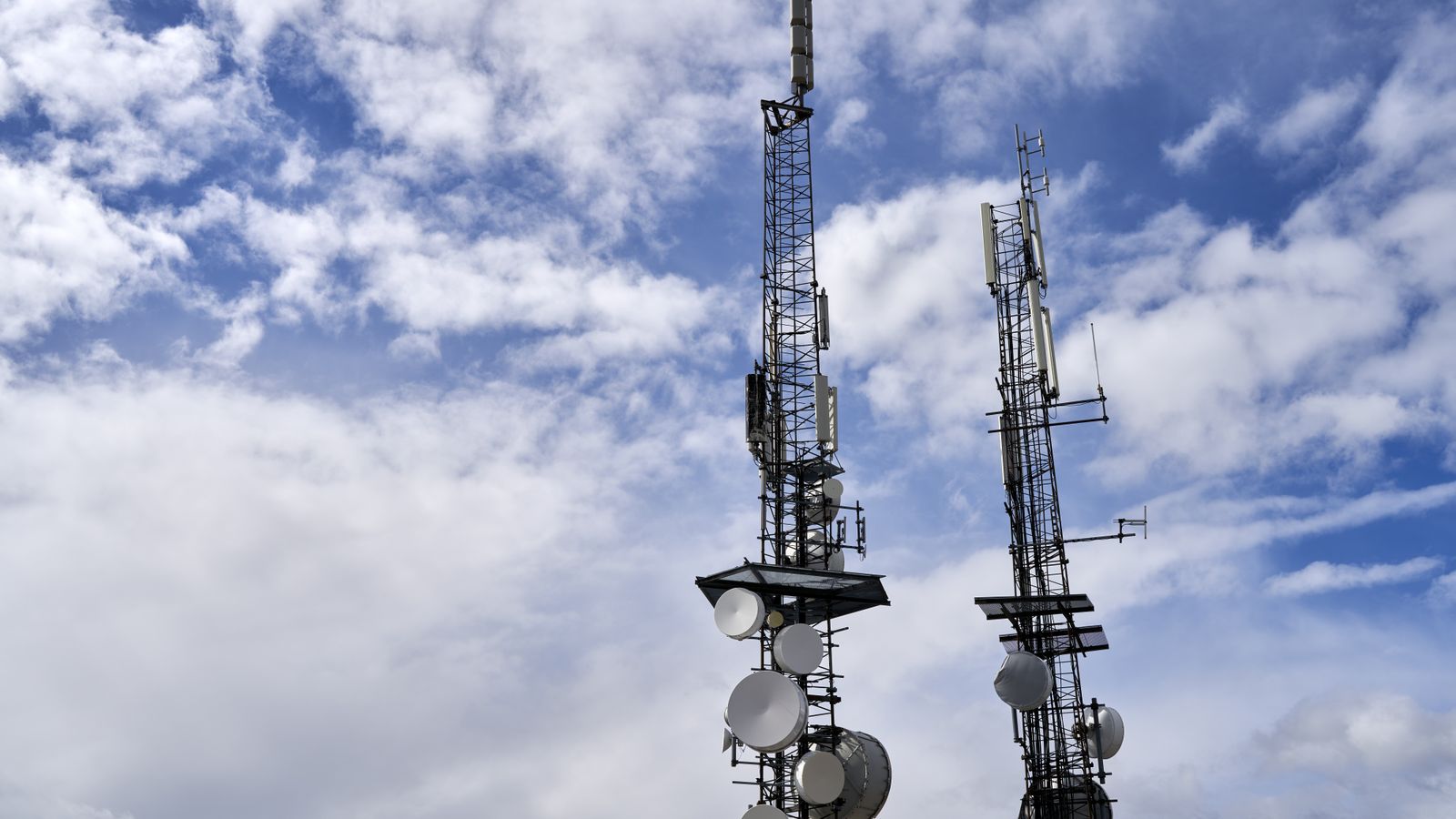
South Africa’s communications regulator will spend three days this week showing international counterparts how it tests spectrum policy before it writes the rules. The rules that came out of the exercise being demonstrated are still in draft, seventeen months after they were gazetted.
ICASA hosts a Regulatory Sandbox Study Visit in Pretoria from 8 to 10 September, with the International Telecommunication Union’s Telecommunication Development Bureau, the United Kingdom’s Foreign, Commonwealth and Development Office, the UK communications regulator Ofcom, the Communications Authority of Kenya and South Africa’s Council for Scientific and Industrial Research. The visit is funded through the ITU and FCDO partnership under the UK’s Digital Access Programme, which runs in Brazil, Indonesia, Kenya, Nigeria and South Africa.
What the sandbox actually tested
ICASA says it completed trials of Dynamic and Opportunistic Spectrum Assignment between 2025 and March 2026, run inside a regulatory sandbox. The three-day agenda covers how such a sandbox is designed and run, simulations drawn from those spectrum trials, Kenya’s own sandbox experience, and international perspectives.
The principle is straightforward and the engineering is not. Spectrum that a primary licensee holds but does not use at a particular place and time can be assigned to someone else on a secondary basis, provided the primary user is protected from interference. Television white spaces was the first application of the idea in South Africa. The draft regulations extend it into what ICASA calls the innovation spectrum: 3800 to 4200 MHz and 5925 to 6425 MHz.
Those two ranges are not idle choices. The first sits in the upper part of the C band, where satellite downlinks operate. The second is the lower 6 GHz band, the same territory Wi-Fi 6E was given. Both are contested, which is precisely why a regulator would want to test assignment rules before imposing them.
The paperwork has not moved since October
ICASA published the draft regulations on dynamic spectrum access and opportunistic spectrum management on 28 March 2025, in Government Gazette 52415 under Notice 6066 of 2025. Written representations were originally due on 30 May 2025 and the deadline was extended to 13 June. Public hearings were held from 1 to 3 October 2025.
As of 7 September 2026, neither ICASA’s inquiry record for the process nor its published list of final regulations carries a final version. The only finalised white spaces instrument on that list remains the Regulations on the Use of Television White Spaces from 2018, in Gazette 41512. That is roughly seventeen months since the draft was gazetted and eleven since the hearings closed. Neither this week’s announcement nor the inquiry record gives a date for publication.
Why it matters beyond the paperwork
Shared spectrum is the cheapest capacity a country can add. It requires no auction, no new allocation and no licensee to give anything up permanently. For wireless internet providers working outside the metros, the difference between dynamic access and the status quo is the difference between using capacity that is sitting idle and waiting for the next assignment round.
It also sits directly alongside the rest of ICASA’s spectrum workload. The regulator mapped its mobile spectrum plan out to 2030 in August, and heard argument on satellite spectrum rules the same month. Dynamic assignment in the C band touches both files.
The study visit is a real signal even with the regulations unfinished. Kenya is bringing its own sandbox experience rather than only observing, and the ITU is paying for the exchange. What is being exported this week is the method of testing a rule before writing it, rather than the rule itself.


Leave a Reply