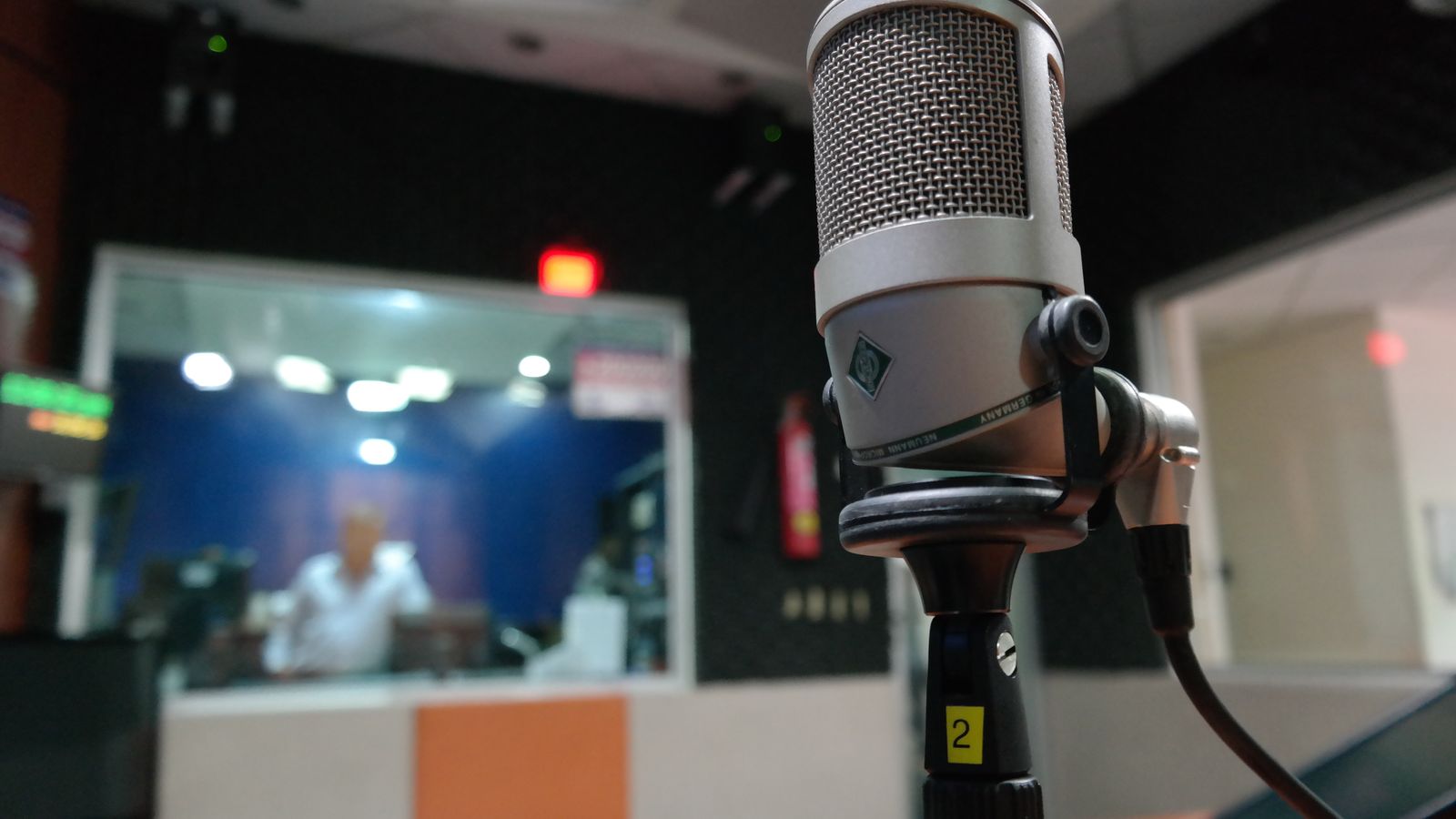
The Independent Communications Authority of South Africa has granted broadcasting and spectrum licences to 18 new community radio stations, closing a process that began with 93 applications.
The regulator announced the awards from Pretoria, South Africa on 12 August 2026. Each station receives both a Community Sound Broadcasting Service licence and a Radio Frequency Spectrum licence, the second of which assigns the actual frequency it will transmit on.
93 applications, 18 licences
The process ran from an Invitation to Pre-Register published in Government Gazette No. 51727 on 10 December 2024. Of the 93 applications it drew, 41 were admitted to the first phase. Nineteen of those met the pre-registration requirements and moved to the second. Eighteen were licensed, and one was not.
Roughly one application in five ended in a licence. Most fell away before the second phase rather than at the final evaluation, which suggests applicants were struggling with the entry requirements rather than being judged and rejected on merit.
Where the stations are
KwaZulu-Natal takes the largest share with 5 stations. The Eastern Cape and Limpopo receive 3 each, North West and the Western Cape 2 each, and Gauteng, Mpumalanga and the Northern Cape 1 each.
That covers 8 of South Africa’s 9 provinces. The Free State is the exception, with no station licensed in this round.
The licensees are a mix of non-profit companies, community trusts, youth organisations and faith-based groups. They include Bulungula Community Radio in the Eastern Cape, Lephalale FM and Sibasa FM in Limpopo, Cape Winelands FM in the Western Cape, Mahube FM in Gauteng and Mbombela FM in Mpumalanga.
Why spectrum still matters here
“Community radio plays a critical role in promoting access to information, supporting local development, fostering social cohesion and preserving South Africa’s diverse cultures and languages through storytelling,” said Councillor Ntombiza Sithole, Chairperson of the Committee on Sound Broadcasting Services.
Awarding FM frequencies may look like a legacy exercise while attention sits on satellite and mobile broadband. It is not. Radio remains the medium with the widest reach in rural South Africa; it requires no data bundle, and a receiver costs a fraction of the price of a smartphone. A community licence is one of the few ways a small organisation gets guaranteed access to an audience without paying a platform.
The awards come as ICASA works through a broader licensing agenda. The regulator opened satellite spectrum rules to hearings this month, and ran its final community television workshops in May as it prepares the equivalent process for community television.

Leave a Reply