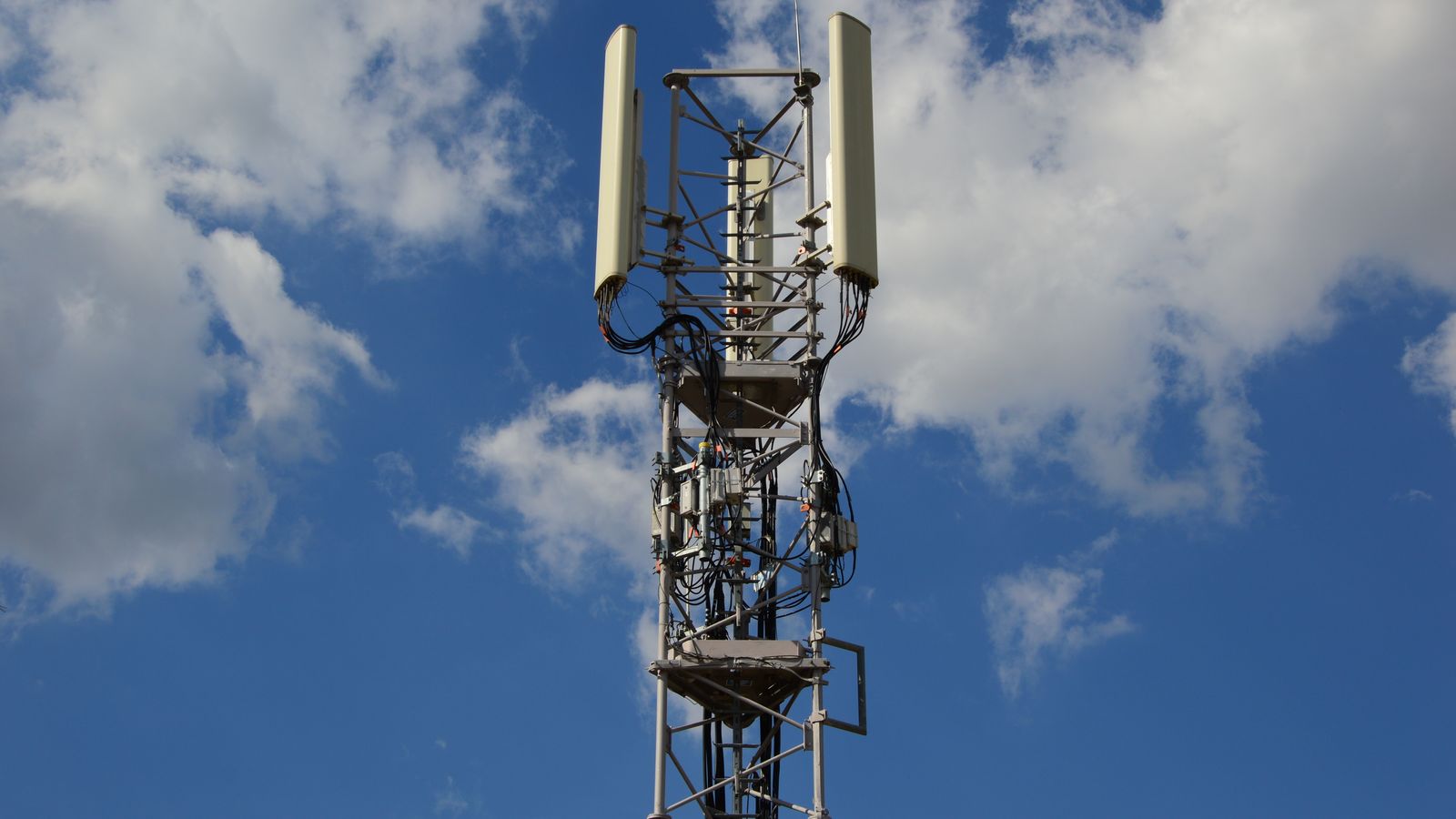
Six months of building has put a 5G signal within reach of more than a million households in Gauteng. Comsol will not sell broadband to a single one of them.
The South African fixed wireless operator said on 20 August 2026 that it is entering the home broadband market as a wholesale infrastructure provider, selling capacity on a purpose-built 5G-Advanced network to internet service providers rather than to consumers. The expansion is backed by two new shareholders, Platform Investment Partners and Wimsey Capital, and follows the exit of Nedbank Private Equity after a nine-year investment.
Partners keep the customer
Comsol owns and operates the network end-to-end, while its partners retain the customer relationship, including branding, packaging, billing, and support. The company said it does not compete with the service providers it supplies and that its API-driven platform is designed to enable a partner to launch a branded offering within weeks.
The structure echoes the open-access model that reshaped South Africa’s fibre market, where the network owner sells wholesale and the retail brand sits with the ISP. Applied to 5G, it gives ISPs, mobile virtual network operators and smaller wireless providers a capacity option that does not depend on the mobile network operators they compete with.
Wholesale 5G is being tested elsewhere on the continent, not always successfully. Ghana stripped Next-Gen InfraCo of its 5G wholesale monopoly in July 2026 after the exclusive model failed to deliver the rollout regulators expected.
The gap fibre left
About 15% of South African households are connected to fibre, with the majority concentrated in dense metropolitan areas where trenching costs can be justified. That leaves a substantial suburban and peri-urban market where fixed wireless can be deployed faster and at lower cost, covering a town in weeks rather than months.
The category is growing. Regulator data cited by the company shows fixed wireless subscriptions rising roughly 39% year on year in 2025, while research firm BMIT expects 5G to account for as much as 67% of residential fixed wireless connections by 2029, up from 35% in 2024.
Competition among South Africa’s network operators has been shifting for some time. Smaller fibre operators outscored the country’s largest eight in an ISPA perception survey published in July 2026, a reminder that scale alone no longer decides who ISPs choose to buy from.
Spectrum, and a standalone core
Comsol received its C-band spectrum licence from ICASA in 2022, and holds what it describes as the country’s largest contiguous allocation of 28 GHz spectrum alongside 60 MHz in the 3.7 GHz band. The regulator has since mapped out its spectrum plans to 2030, setting the terms on which operators can plan long-lived network investments.
The company said its network is one of only two production 5G standalone cores currently live in South Africa, and that the design delivers roughly double the uplink capacity of a typical mobile 5G network, with dedicated capacity control that hybrid 4G and 5G deployments cannot match.
“Comsol anticipates where the market is heading and builds ahead of demand,” said Iain Stevenson, founder and chief executive of Comsol. “This is why we were investing in licensed spectrum years before its strategic value was widely understood and building private 5G before the market had grasped what it would enable.”
The company is not new to the technology. In 2018 it partnered Samsung on a 5G network in Soweto, one of the earliest such deployments in the country.
Who is funding it
Convergence Partners, a long-standing shareholder, is investing further growth capital alongside Solcon Capital. Stevenson retains his stake through Mactavish Investments and is also putting in additional capital. RMB arranged the funding package supporting both the shareholder transaction and the capital expenditure programme.
“Comsol is well positioned as the world transitions from 5G to 6G,” said Andile Ngcaba, executive chairman of Convergence Partners and chairman of the Comsol board. “The depth of its spectrum and nationwide network presence across all provinces creates a significant opportunity to serve South Africa’s enterprise, private and public sectors.”
Comsol is targeting full coverage of Gauteng by March 2027, with the Western Cape, KwaZulu-Natal and major regional centres following in 2027 and 2028. The national plan calls for about 2,000 base stations. Whether the wholesale bet pays off will depend less on the network than on how many ISPs decide they would rather rent capacity than build it.




Leave a Reply