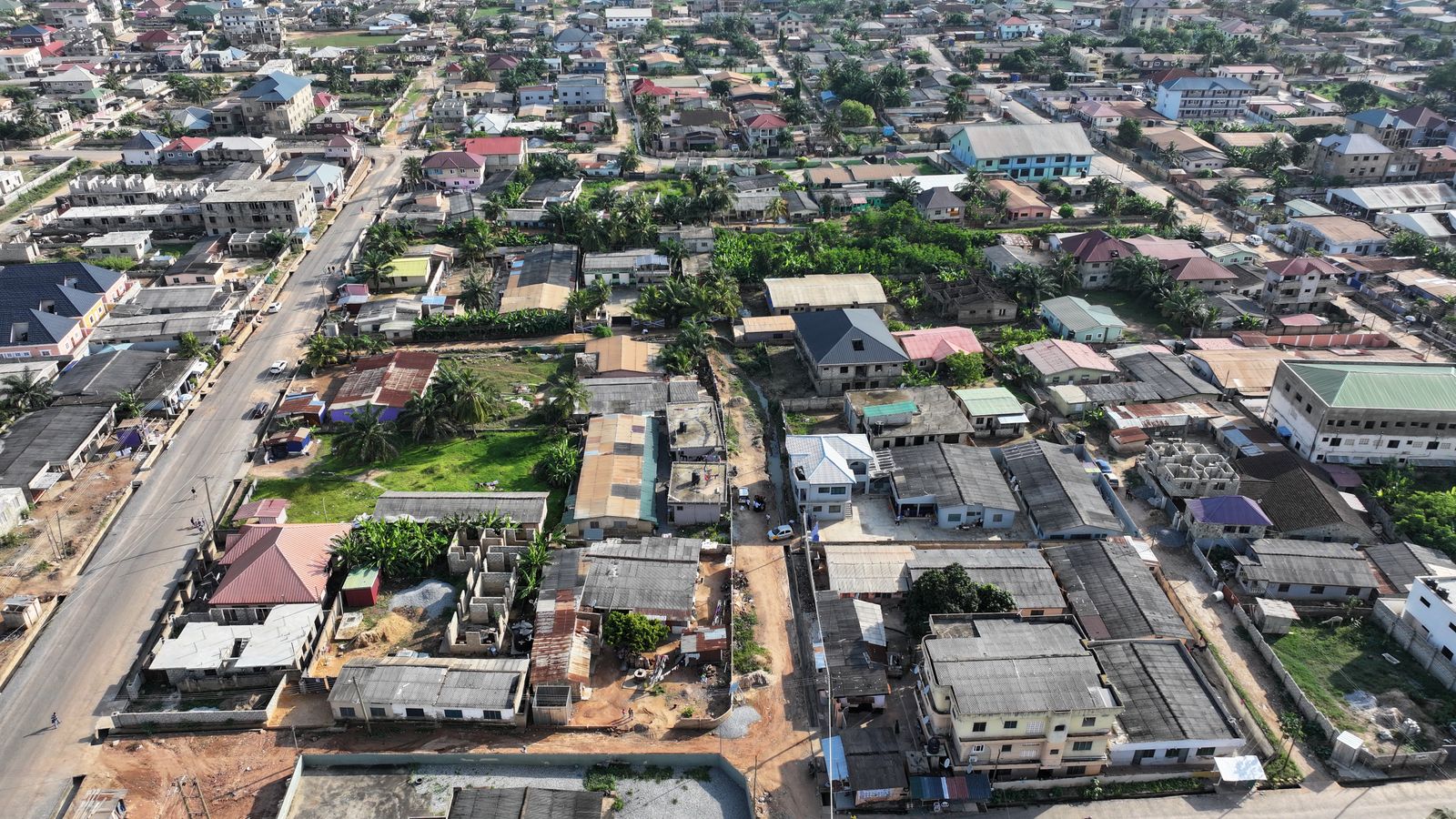
Forty-nine sites against a plan for 4,400. That gap has cost Next-Gen InfraCo (NGIC) the monopoly Ghana handed it two years ago.
The National Communications Authority (NCA) confirmed on 15 July 2026 that it has removed the condition granting NGIC “exclusive rights to operate as the sole provider of Ghana’s wholesale 5G infrastructure”. The amendment to NGIC’s Wholesale Electronic Communications Infrastructure (Telecommunications) Licence took effect the same day.
The regulator acted under section 14 of the Electronic Communications Act, 2008 (Act 775), which allows it to amend licence conditions in the public interest. Its conclusion was that “the public interest is better served by a competitive wholesale 5G market that promotes investment, innovation, network resilience, service quality and wider access to advanced communications services”.
What Ghana was promised
NGIC was launched in June 2024 as a shared infrastructure company co-promoted by the Government of Ghana, Ascend Digital and K-NET, with the partnership signed in Mumbai, India, on 27 May 2024. Equity was to be held by the Republic of Ghana, Ascend Digital, K-NET, all mobile network operators in the country and other investors, with Nokia, Radisys and Tech Mahindra named as technology partners.
The model was deliberate: rather than let each operator build its own 5G network, Ghana would license one wholesale carrier to build once and sell capacity to everyone. Ursula Owusu-Ekuful, then Minister for Communications and Digitalisation, said the initiative “aims to propel Ghana towards a fully digitised nation by 2030, ensuring universal access to high-speed, secure, and seamless mobile services”.
The targets attached to that promise were specific. NGIC was to deploy 4,400 sites, reach 37 million end customers by 2028, increase 4G penetration from 15% to more than 80%, and achieve full digital coverage by 2030.
What Ghana got
By March 2026, nearly two years after launch, NGIC had installed 49 5G sites across six regions. Forty-three of them were in Greater Accra.
When the NCA issued its Notice of Proposed Licence Amendment on 2 March 2026, it also recorded that NGIC “is in default of its licence fee instalment payment under the Schedule of Licence Fee Payments”. The regulator listed four objectives for the change: promoting competition and innovation in 5G, enhancing consumer choice and service quality, accelerating nationwide digital transformation, and ensuring optimal and efficient use of spectrum as a national resource.
A contested process
NGIC did not concede the point. The NCA met the company on 18 March 2026, received a Statement of Objections on 1 April, heard oral representations before its Governing Board on 28 May, and confirmed the amendment six weeks later.
The company is not losing its licence. The NCA said NGIC “retains all its other rights and obligations under the Licence, including its spectrum assignment”. What it loses is the guarantee that no one else may build wholesale 5G in Ghana.
Why it matters
The weakness of a single-wholesale-network model is structural: if the one licensed builder stalls, the market stalls with it, because no one else is permitted to move. Ghana has now tested that proposition and blinked.
Ghana is not the only market where a regulator has reopened terms an operator treated as settled. In South Africa, ICASA has been working through its own equity-rule question, a reminder that a licence is a set of conditions rather than a possession.
Removing exclusivity does not by itself put a single new mast in the ground. It means the NCA can license others to try, and it puts NGIC in the position of competing for the market it was once given outright. Ghana’s position sits inside a wider continental picture, where Africa’s recent 5G ranking gains have looked fragile.
Whether Ghana’s operators now build their own 5G or the NCA licenses a rival wholesaler is the question the next few months will answer. The regulator’s statement carries the reference NCA/PR/2026/6.


Leave a Reply