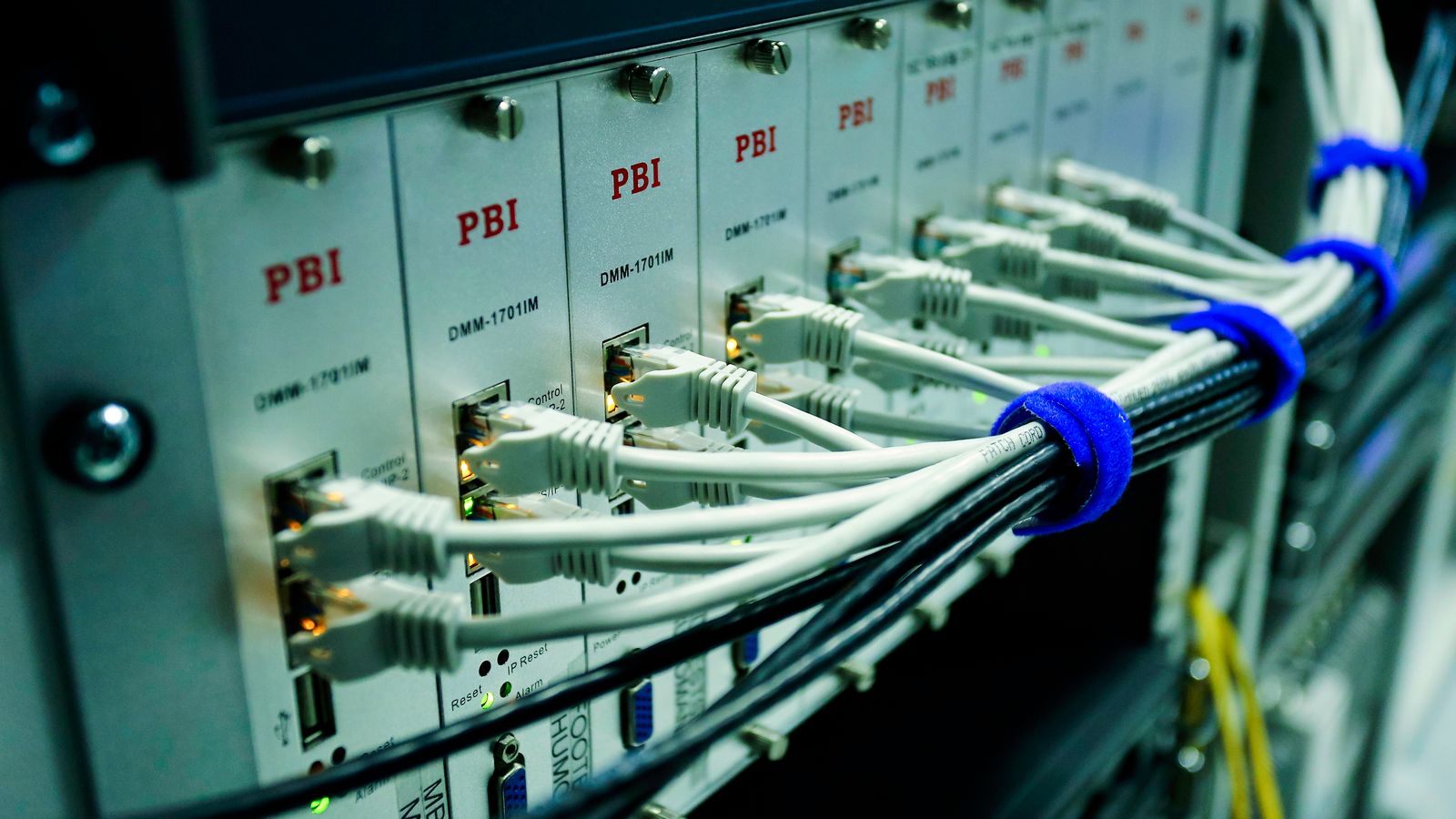
Nigeria’s main internet exchange has upgraded the heart of its network to 400G, a quiet but important boost for the plumbing that keeps the country’s internet traffic local and fast.
The Internet Exchange Point of Nigeria (IXPN) said it has upgraded its core switches to 400G-capable platforms at three of its Lagos points of presence: Equinix LG1, Digital Realty LOS1 and Rack Centre. The move brings 400 Gigabit Ethernet (400G) peering, four times the widely used 100G, to all three sites.
An internet exchange is a shared facility where networks, from ISPs to content and cloud providers, interconnect and swap traffic directly through peering, rather than paying to route it through distant countries. Keeping that exchange local cuts cost and latency, and IXPN is the largest such hub in Nigeria.
Fewer cables, more capacity
The upgrade, built on new Arista 7368-CH core switches, does two things. For members, it enables 400G connections and lets networks running several bundled 100G peerings consolidate them into a single 400G handoff, which IXPN says can cut cross-connect costs, simplify edge setups, improve port use and lower operational complexity.
For the exchange itself, it lays the groundwork to migrate its own bundled 100Gbps links, including the connections between its points of presence, to native 400Gbps circuits, reducing the need to gang multiple ports together and freeing up capacity.
Built for surging traffic
The headroom is needed. IXPN recently doubled its peak traffic to more than 2 Tbps, driven by streaming, software updates and the growing weight of cloud and AI services, and demand for higher-capacity interconnection across Nigeria and the region keeps climbing.
It also mirrors a wider African push to faster peering fabrics, seen recently when NTT DATA lit a 400 Gbps peering link at Johannesburg’s JINX. IXPN said the next steps are migrating its inter-PoP backbones to 400G and onboarding the first 400G peers, as Nigeria’s internet backbone is quietly rebuilt for the next generation of traffic.




Leave a Reply