
Equatorial Guinea will route all Starlink sales through ORTEL, the body that regulates its telecoms market, and cancel service contracts citizens obtained outside official channels. The decisions came from a working session led by Vice President Nguema Obiang Mangue on 9 September 2026.
The government release states that “the legal authority for selling the service should rest with ORTEL, under the supervision of the State Secretariat for Artificial Intelligence”. APO Group distributed it on behalf of the government’s official web page.
The seller is the regulator
ORTEL is the Órgano Regulador de las Telecomunicaciones, Equatorial Guinea’s telecommunications sector regulator. The state-owned operator is GETESA. So the entity being given legal authority to sell the service is the one that supervises the market it would be selling into.
The release does not address that, and the wording reaching us is an English translation of a Spanish-language government statement, so it is worth reading it as published rather than inferring intent. The direction is clear: one designated channel, with the regulator named in it.
The supervising body is the State Secretariat for Artificial Intelligence, which is an unusual home for satellite broadband distribution.
Existing customers lose their contracts
The session also ordered the cancellation of contracts individuals had acquired outside official channels, a specific bank account to control Starlink’s income and service payments, and the training of Equatorial Guinean technicians to install and maintain equipment.
That first order is the one that immediately affects people. It implies a population already using the service, which is possible before an official launch because Starlink sells regional and roaming plans that work across borders. Those customers should now be moved to the state channel.
The country is not yet a live market
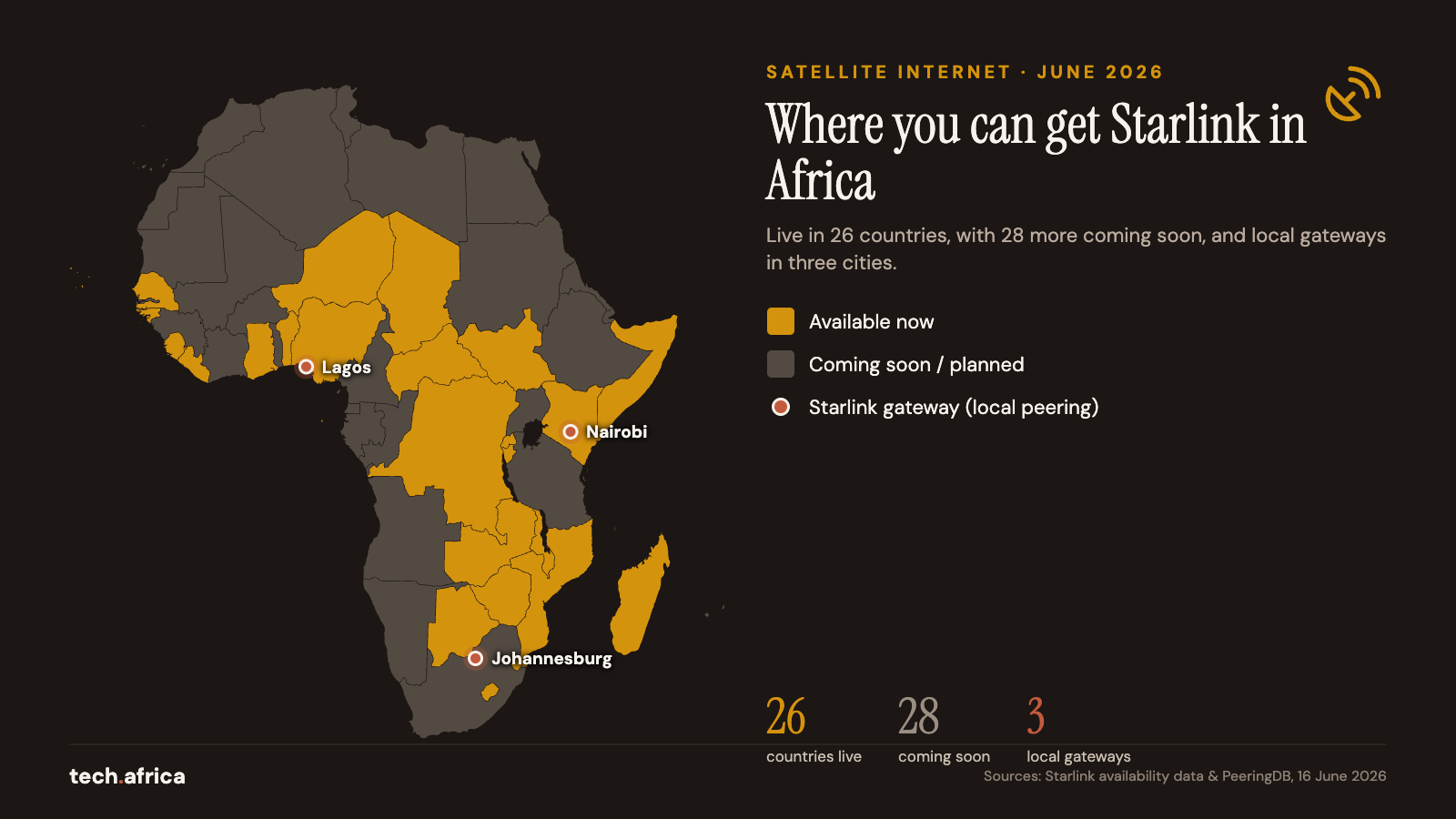
Equatorial Guinea sits in the coming in 2026 group on our Starlink availability tracker, not among the 26 African countries where the service is live. A government is therefore setting the terms of distribution for a service that has not formally launched there.
Nothing in the release gives a price, a licensing fee, an availability date, contract terms or an implementation timeline. Without those, the practical question for a household in Malabo, Equatorial Guinea, is unanswered: what the state channel will charge, and when.
The pattern is worth watching beyond one country. Satellite internet reaches consumers without the local infrastructure a government can license, tax or switch off, and states that want a hand on it have to intervene at the point of sale. Equatorial Guinea has chosen a direct form of that intervention, short of blocking the service outright, and readers weighing the alternatives to Starlink in Central Africa should expect the question to recur.


Leave a Reply