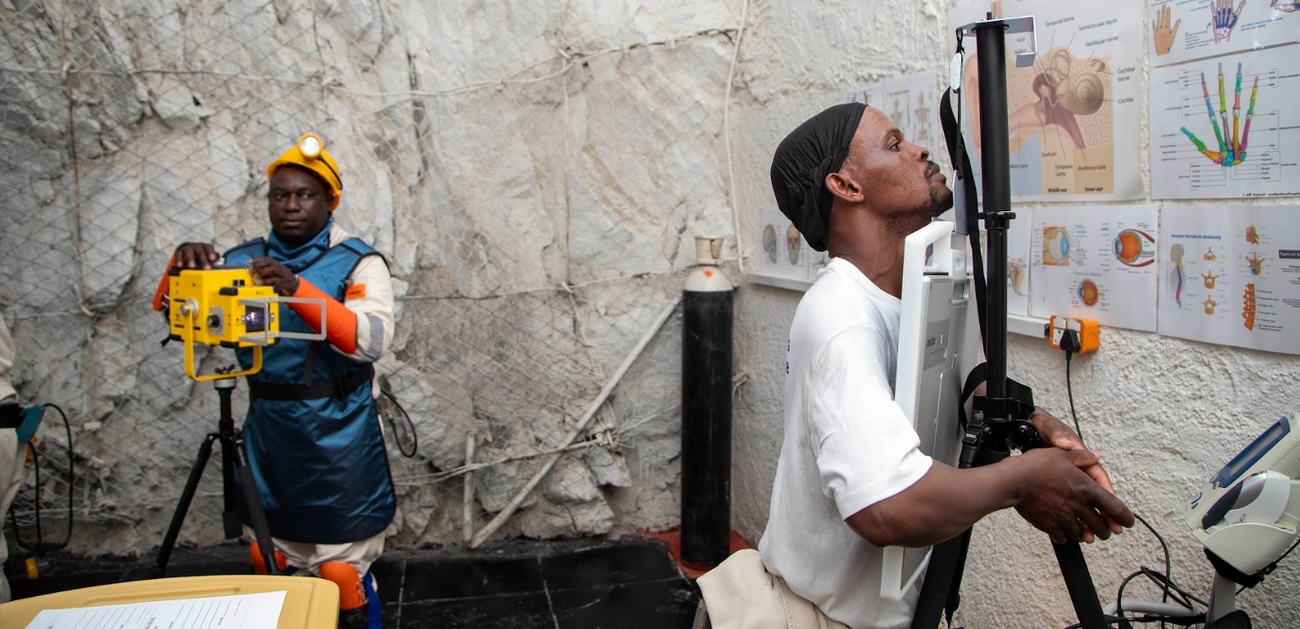
An AI tool built in Pretoria can scan a chest X-ray for signs of lung disease in as little as 45 seconds, and it is already being used underground in one of the world’s deepest gold mines.
The tool, Nexus AI, comes from Nexus Intelligence, a South African start-up founded in 2022 by Dr Gerhard Ferreira, a medical doctor, and Andries Vorster, a clinical engineer. It reads chest X-rays to flag tuberculosis (TB), occupational lung diseases such as silicosis, and other abnormalities, then hands the findings to a clinician for the final call.
Built on a Google model
Nexus did not start from scratch. Google licensed its own chest X-ray AI model to the company, which then built its CE-certified medical device on top of it. The tool runs 2 AI models in parallel: one checks whether the lungs appear normal and highlights abnormal areas, while the other screens specifically for TB, marking the image with heatmaps and contour lines.
Crucially, in remote and underground settings, it works entirely offline and returns results at the point of care, so screening can happen where the patient is rather than waiting for a radiologist elsewhere.
Screening miners across six countries
Nexus AI has analysed more than 25,000 X-rays across 40 locations in 6 countries. Its African deployments include the Northern Cape in South Africa, Côte d’Ivoire, Sierra Leone and Cameroon, alongside Vietnam, and it has been used underground at the Mponeng gold mine, one of the deepest in the world.
For mineworkers, who face high rates of TB and silicosis, faster screening can mean earlier treatment. The team says the tool is now identifying cases that would have been missed previously.
The project fits a broader argument that African health systems may be an ideal proving ground for AI, where the technology fills gaps rather than replacing scarce specialists. It also reflects Google’s growing work with African start-ups and a wider push to bring technology underground in the continent’s mines.




Leave a Reply