This is a guest opinion column by Fernando Fernandes, Chief Executive Officer of TelCables Nigeria and West Africa. The views expressed are the author’s own and do not necessarily reflect those of tech.africa.
Nigeria and West Africa’s digital transformation stands at a pivotal crossroads. Nigeria and the broader region are experiencing considerable upward growth in connectivity, data consumption, and digital adoption, yet persistent challenges around reliability, cost, power supply, foreign exchange risks, and data sovereignty threaten to undermine these gains. As CEO of TelCables Nigeria, a subsidiary of the Angola Cables global network, I see the immense opportunities, and the urgent need for localised, resilient solutions that put African businesses and governments in control of their digital futures.
Investments by telcos like MTN’s FiberX and WIOCC’s Open Access Metro sit alongside government initiatives such as Project Bridge by the Ministry of Communications, Innovation and Digital Economy, a US$2 billion investment into 90,000 km of terrestrial last-mile infrastructure expanding from Points of Presence (PoPs), hubs, cable landing stations (CLS), and data centres for businesses across the region. This is critical. According to statistics recently released by the Nigerian Communications Commission (NCC), Nigeria now has around 192 million mobile subscriptions and broadband penetration climbing beyond 55% in recent years. Alongside surging data usage (averaging nearly 10 GB per user monthly), reliable backbone connectivity is no longer optional, it is a national imperative for the country’s economic diversification beyond oil.
Cloud adoption critical for social and economic development of the region
Cloud computing adoption is accelerating, particularly in the financial services industry (FSI), which is encouraging businesses, both public and private, to leverage IaaS, backup, disaster recovery, and containerised solutions like Kubernetes, within their enterprise environments. However, the heavy reliance on international hyperscalers such as AWS and Azure introduces substantial financial volatility, foreign currency challenges, and compliance risks under Nigeria’s Data Protection Act (NDPA).
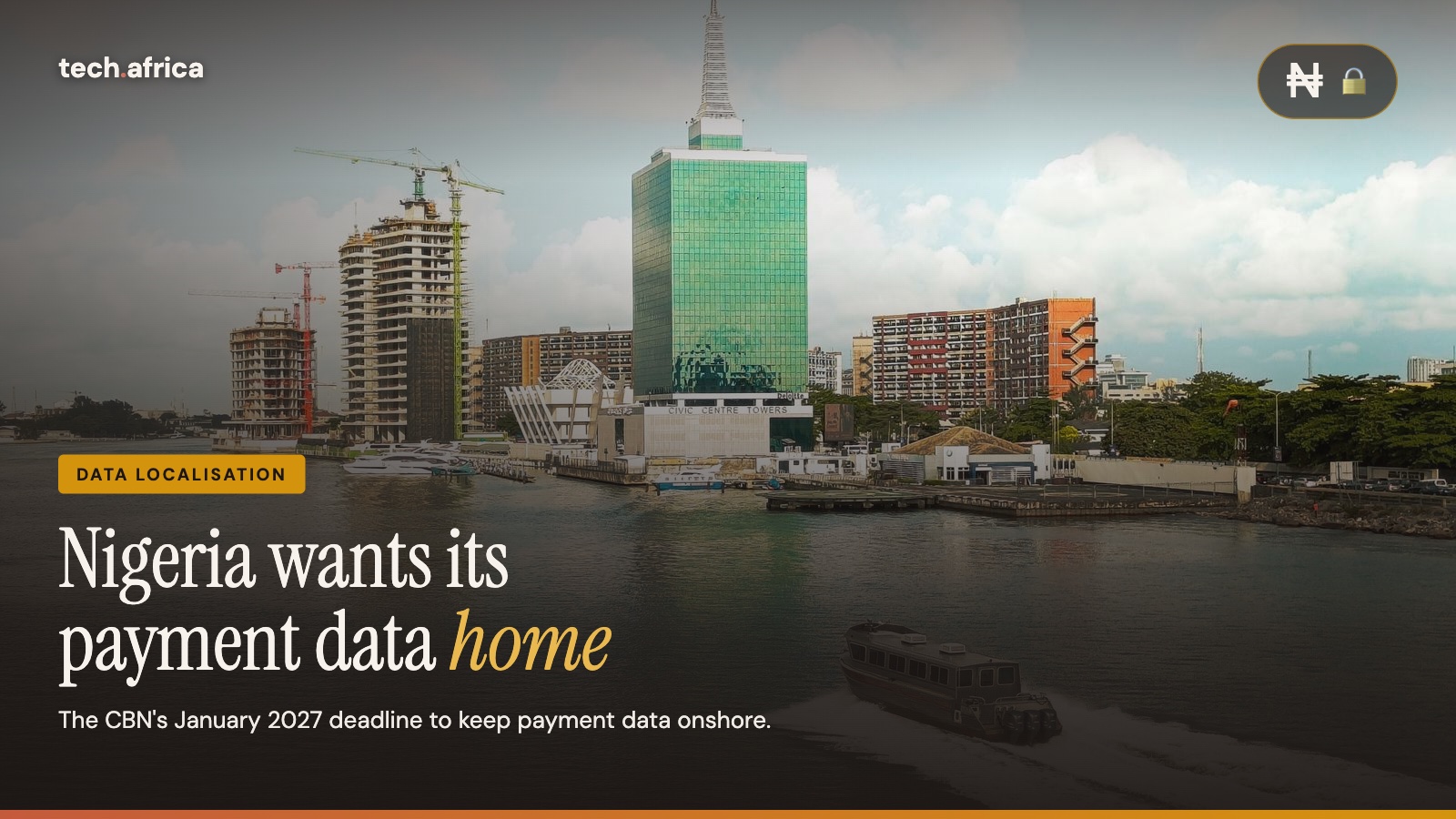
Data hosted offshore creates latency, unpredictable egress costs, and jurisdictional vulnerabilities that clash with national priorities around sovereignty and security. To counter this, and bring stability and security, the Central Bank of Nigeria has mandated that all banks, fintechs, and payment service providers store and manage all local payment transaction data within Nigeria by 1 January 2027.
This shift in policy is a catalyst for local innovation to come to the fore. TelCables Nigeria’s cloud compute solution, Clouds2Africa addresses these gaps directly: featuring two nodes in Lagos, billing in NGN to mitigate currency risks, and offering a full suite of enterprise services including IaaS, secure backups, and disaster recovery.
Crucially, Clouds2Africa is fully AWS-compatible, enabling seamless integration and effortless transition for businesses already familiar with public cloud architecture. To ensure a frictionless journey, TelCables offers a dedicated secure workload migration program to assist these enterprises in migrating workloads from diverse, heterogeneous environments to a localised data solution, safely and without disruptive downtime.
Furthermore, leveraging Angola Cables’ massive global backbone capacity and extensive submarine cable network (SACS, WACS, MONET), Clouds2Africa eliminates one of the biggest hidden operational costs of cloud adoption by offering zero egress fees for most of the use cases. Coupled to their strategic PoPs and partnerships with tier-three local data centres such as Rack Centre and Medallion, TelCables can deliver ultra-low latency, high-resilience connectivity that keeps Lagos’ digital core connected to the world while maintaining critical workloads securely within regional borders.
The path forward demands collaboration
Yes, challenges persist: power reliability, last-mile gaps in underserved areas, and the continuous need for technical skills development. If we are to succeed in overcoming these hurdles, both government and industry must collaborate to support initiatives that accelerate the adoption of local infrastructure and secure Nigeria’s digital future.
Industry players, regulators (NCC, NITDA), and government must prioritise open-access models, incentives for local data centres, and public-private partnerships like Project Bridge. At TelCables, we remain “Africa’s Most Interconnected Operator,” investing in terabit-scale rings interconnecting major Lagos data centres and continually expanding our footprint.
Our goal is clear: as a business and solutions provider, we want to assist in promoting the widespread adoption of capable, local cloud infrastructure that delivers secure performance, affordability, and control. By localising traffic, eliminating transfer costs, securing data, and building resilient networks, we can help unlock productivity, create jobs, foster innovation, and position West Africa as a competitive digital hub within the global geography.

Leave a Reply