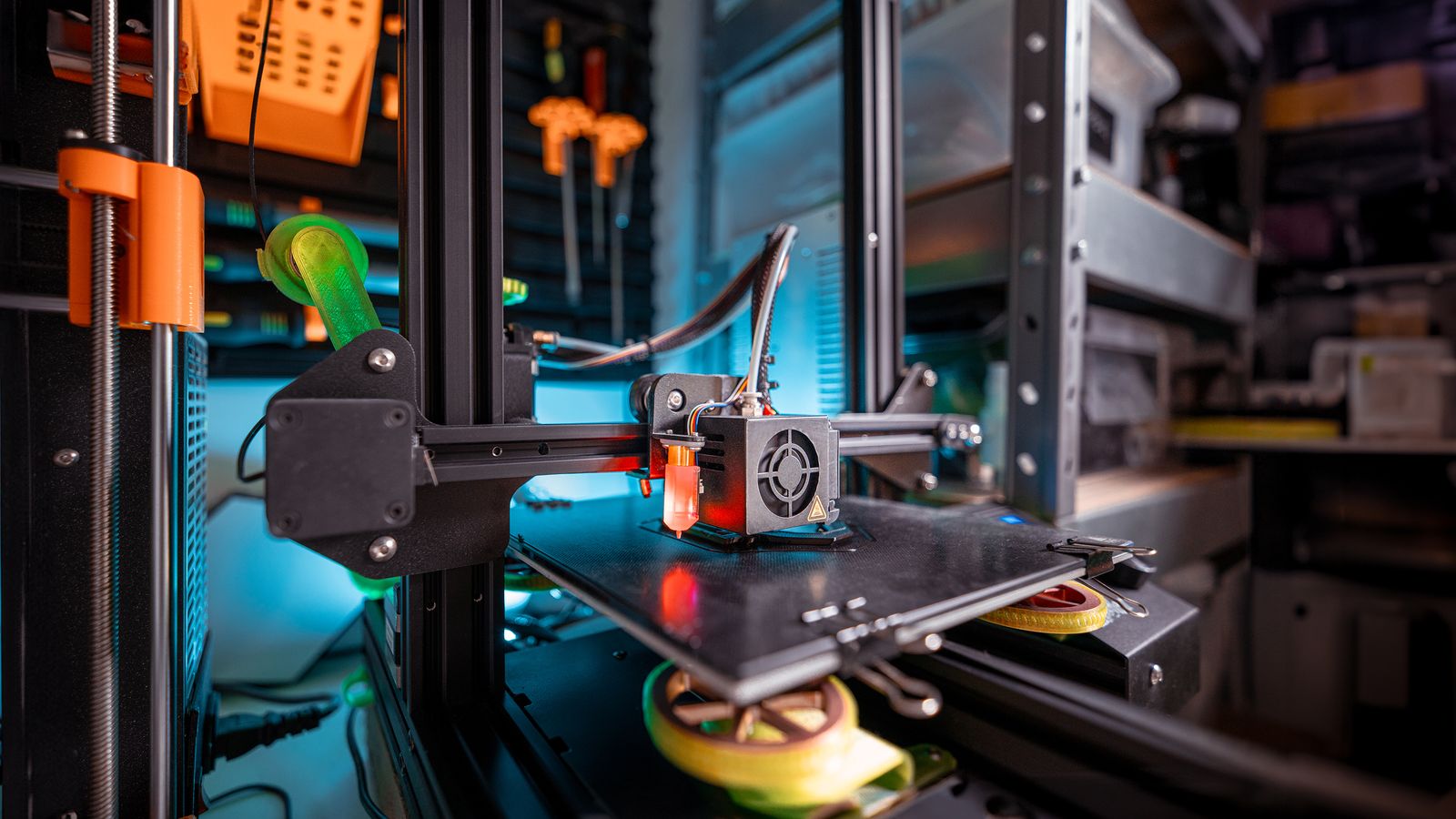
Nigerian industries that have long waited months for imported spare parts may now be able to print them in Lagos instead.
Arridex has commissioned its Omnifactory, which it describes as West Africa’s first multi-technology industrial additive manufacturing facility, in other words, an industrial 3D-printing plant. The plant was opened at a Lagos ceremony on 29 June 2026 by Babajide Sanwo-Olu, governor of Lagos State, on the sidelines of the Invest Lagos 3.0 forum.
Printing industrial parts on demand
The Omnifactory brings several additive manufacturing methods under one roof, including laser powder bed fusion, cold spray and selective laser sintering, to make industrial components, spares and redesigned parts on demand. Its large-format capability stretches to full-size marine components and other large industrial structures.
The target is a long-standing weakness in the African industry: reliance on imported parts. Asset owners running ageing infrastructure routinely face long procurement lead times, supply chains spanning several countries, and legacy components whose original manufacturers no longer exist. Arridex says the plant can manufacture those parts locally instead, for sectors including oil and gas, maritime, aerospace, defence and construction.
“Technology and innovation” are central to the industrialisation of Africa, Kayode Adeleke, group chief executive of Arridex, told the Invest Lagos panel on the future of technology, drawing on the company’s work across those heavy industries.
Two decades in the making
Arridex started in 2005 as an asset-integrity practice in Nigeria’s oil and gas sector and expanded into maritime, defence, construction and aerospace. The company says it has recorded zero lost-time incidents across more than seven million working hours.
The launch lands amid a broader push to build more of Africa’s industrial base on the continent rather than import it, and adds to a run of industrial and digital investment in Lagos, from data-centre expansion to local assembly in sectors like electric mobility. Whether on-demand additive manufacturing can scale economically against cheap imports is the test now facing the Omnifactory, but for critical parts that are hard to source, making them in Lagos is the point.

Leave a Reply