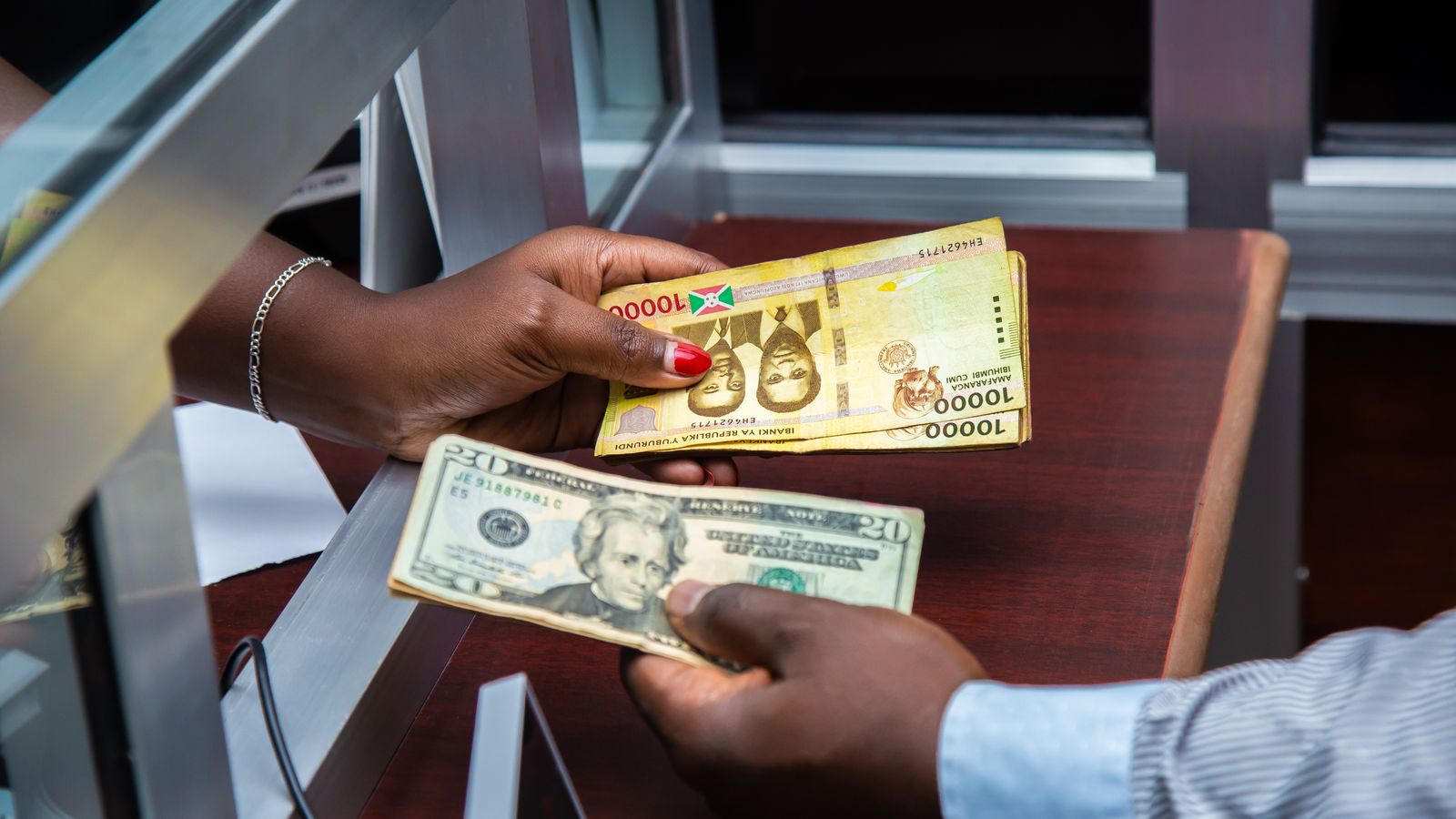
Getting paid across borders is one of the hardest parts of running a business in Africa. A Nigerian startup has just raised fresh capital to make it easier, using stablecoins.
Daya, a Lagos-based fintech, has closed a $2.4 million pre-seed round led by Hivemind Capital, a New York digital-asset investment firm, the company announced on 24 June 2026. Other backers include the crypto-focused funds Alliance and Lattice.
A stablecoin neobank for businesses
Daya describes itself as a business-focused stablecoin neobank: a single platform where African companies can hold virtual US dollar accounts, send and receive instant cross-border payments, pay with cards and settle in stablecoins while managing treasury across currencies. Its products include an onramp and routing engine, a flagship business app and developer APIs.
“Daya is a B2B stablecoin neobank that enables local African businesses to access the global dollar economy via virtual USD bank accounts, instant global payments and payment cards,” said Kayla Phillips of Hivemind Capital, which led the round.
The company, which calls itself “the financial engine for African businesses”, was founded in 2025 by Aleph Lasebikan and Paul Joe, both veterans of African crypto. Lasebikan is a co-founder and former chief product officer of Helicarrier, the Y Combinator-backed Nigerian crypto company formerly known as Buycoins, where he led what Daya says was Nigeria’s first local-currency stablecoin. He later worked as a principal product manager at Circle, the issuer of the USDC stablecoin. Joe held product and research roles at Helicarrier before moving into venture investing.
A Gulf corridor, then a raise
The funding follows a partnership Daya struck earlier in the month. On 4 June 2026, the Dubai-based exchange HashKey MENA, licensed by the emirate’s Virtual Assets Regulatory Authority, named Daya its African payments partner in a pilot stablecoin corridor linking the Middle East and Africa, built with the Aptos Foundation.
Under the pilot, a company in the United Arab Emirates converts local currency into stablecoins via HashKey; the tokens then move across the Aptos blockchain, and Daya converts them into local African currencies for the recipient, starting with the Nigerian naira. Daya provides on- and off-ramps on the African side through its routing engine, virtual local-currency accounts, and payment APIs.
“Africa is already a frontrunner in stablecoin adoption. What has been missing is the regulated infrastructure and scalable liquidity to connect that demand to the rest of the world,” Joe said when the corridor was announced.
Riding the “digital dollarisation” wave
The rise lands in the middle of what investors call digital dollarisation: the rush by companies and savers in volatile-currency economies to hold and transact in dollars. Stablecoins, blockchain tokens pegged to the dollar, have become a fast and cheap way to move that value across borders, sidestepping correspondent banks and scarce foreign exchange.
It is a crowded and fast-moving space. Global players are pushing in, with PayPal recently extending its PYUSD stablecoin to Uganda and Malawi, while a wave of local startups builds cross-border payment rails across the continent.
The open question is regulation. Stablecoin and crypto rules remain a work in progress across most African markets, including Nigeria, and how clearly they land will shape how far platforms like Daya can scale. For now, the company has fresh capital and a bet that African businesses increasingly want to bank in dollars.



Leave a Reply