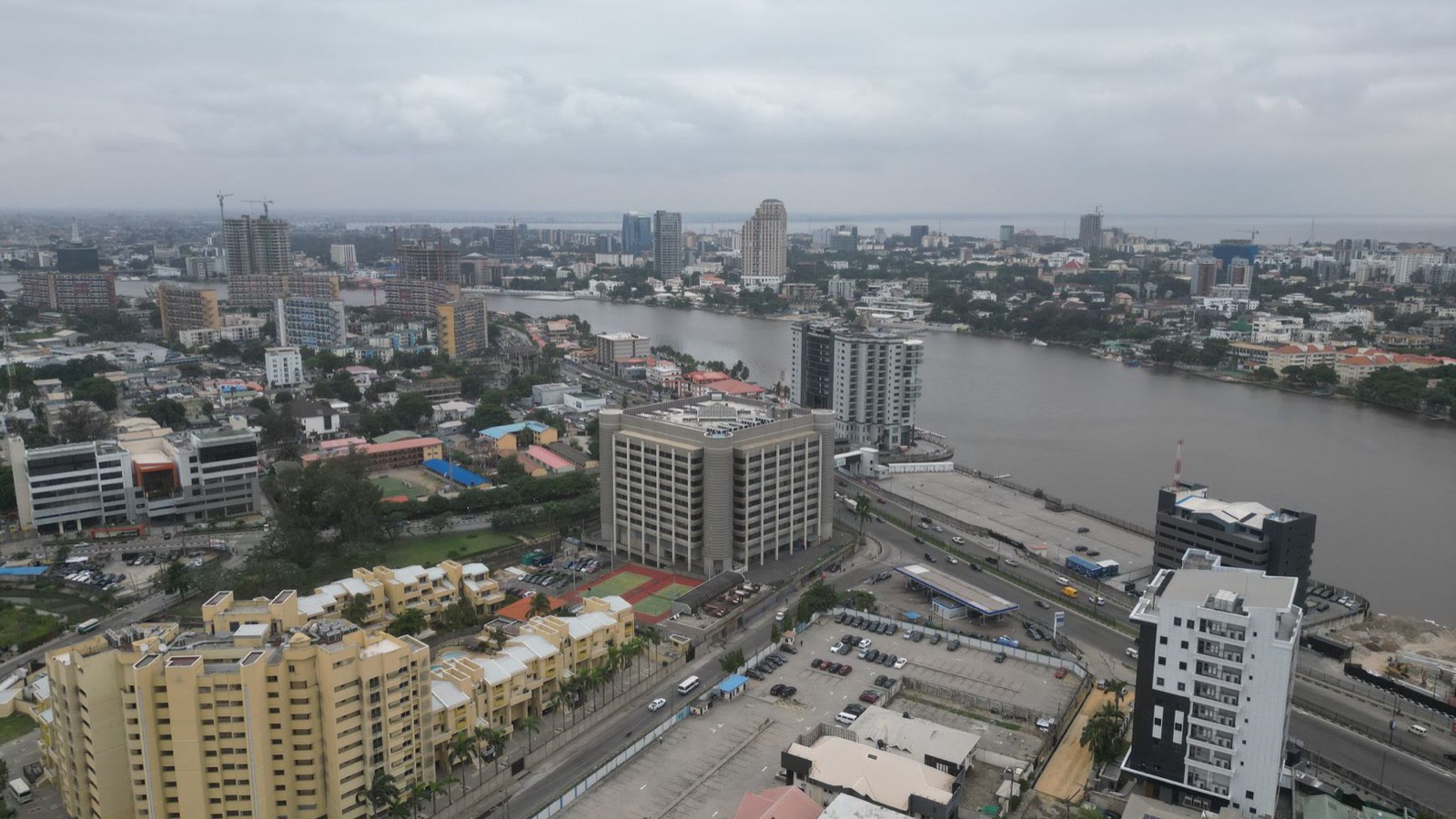
Many Nigerian businesses have bought their cloud servers abroad, in Europe, South Africa or the United States, and paid for them with an international card. That default is being challenged on several fronts at once: regulation that wants some data kept at home, growing in-country capacity, and payment options that no longer assume a dollar card.
This guide sets out what to check before choosing Cloud Hosting in Nigeria, whether for a website, an application or a regulated workload.
Key takeaways
- From 1 January 2027, payment data generated in Nigeria must be stored in the country under a Central Bank of Nigeria circular.
- Other personal data can leave Nigeria, but only on grounds the data protection regulator sets, such as an adequacy decision or an approved transfer instrument.
- The most sensitive classes of government data must be hosted in Nigeria under NITDA’s National Cloud Policy.
- On one provider’s measurements, servers in Lagos reach Lagos in under a millisecond and Kano in about 17, against about 70 from Europe or Johannesburg.
- Ask any provider where the data physically sits, whether it peers at IXPN, how the facility is powered, and whether you can pay in naira.
1. Where the data sits
The firmest rule so far covers payments. The Central Bank of Nigeria has directed banks, fintechs, mobile money operators and other payment service providers to store locally generated payment transaction data in Nigeria, with a compliance deadline of 1 January 2027. For any business in or near the payment system, hosting abroad now has an expiry date.
Other personal data can leave the country, but only under certain conditions. The Nigeria Data Protection Act, signed on 12 June 2023, governs transfers abroad, and the Nigeria Data Protection Commission’s 2025 implementation directive lists the grounds: an adequacy decision by the Commission, a cross-border transfer instrument it has approved, or another lawful basis, such as the individual’s informed consent or necessity for a contract.
Government data is held to a stricter standard. The National Cloud Policy that NITDA, the national IT agency, released in October 2025 requires sovereign data in its highest sensitivity classes, levels 3 and 4, to be “hosted exclusively within Nigeria”, and NITDA’s content guidelines already told ministries and agencies to keep sovereign data on servers in the country.
Hosting in-country does not by itself make a business compliant, and specific obligations call for a legal assessment. But it removes the cross-border question for the data held there, which is often the hardest part of the paperwork.
2. How close the servers are
Distance shows up as delay. AFRICLOUD’s own best-case measurements put its Lagos servers 0.1 milliseconds from Lagos, 9.9 from Abuja and 16.9 from Kano. The same company’s servers in Lisbon and Johannesburg sit about 69 to 71 milliseconds from Lagos. Real-world figures run higher, by 10 to 30%, the company says, but the gap is what matters: every page load, API call and database query pays it.
Location is only half of it. A provider in Lagos that doesn’t exchange traffic locally can still send Nigerian users’ data abroad and back. The Internet Exchange Point of Nigeria (IXPN), where networks exchange traffic directly, passed 2 Tbps of peak traffic in 2026. Ask whether a provider peers there.
3. How you pay
International providers generally bill in dollars on an international card, which exposes a Nigerian business to card declines, foreign-exchange spreads and a bill that moves with the naira. Before choosing, check whether a provider invoices in naira and accepts local cards, bank transfer, or USSD for recurring payments.
4. How the building is powered
Nigeria’s grid remains unreliable, and data centres lean heavily on backup generation and hybrid power, which is the main risk behind the country’s data-centre build-out. Ask which facility a provider uses, how it is powered and cooled, and whether you can keep backups in a second region so one site’s outage isn’t your outage.
5. The options
The global cloud giants have limited presence inside Nigeria. Amazon Web Services runs a Local Zone in Lagos, an extension of its Cape Town region that offers a subset of AWS services in the city, but no full AWS region in the country. Microsoft Azure, Google Cloud and Oracle Cloud list no Nigerian region; each has its nearest African region in Johannesburg, and Oracle also has one in Casablanca. For data that must stay in Nigeria, check exactly which services run in-country.
Colocation and data-centre operators, including Equinix, Rack Centre, Open Access Data Centres, and MTN, have been adding capacity in Lagos. They suit organisations that want to own or lease their own hardware, rather than rent virtual servers by the month.
In-country cloud providers sit between the two: rented virtual servers, billed monthly, with the hardware in a Nigerian facility.
AFRICLOUD in Lagos
AFRICLOUD opened its Lagos region in July 2026, its third after Lisbon and Johannesburg, and connected its network to IXPN on 23 July 2026. Its Lagos servers are hosted at Digital Realty’s LOS1 facility in Victoria Island.
Its self-managed cloud servers run from 1 vCPU with 1 GB of memory and 20 GB of NVMe storage to 8 vCPUs, 16 GB and 320 GB, at list prices from $20 to $320 a month, on AMD EPYC processors. The company says a server is online about 2 minutes after checkout, with IPv4 and IPv6 addresses and DDoS mitigation included. Included data transfer is a soft cap: past it, speed drops to 8 Mbps with no overage charge. Dedicated servers in Lagos are built to order, and managed services are available.
On payment, AFRICLOUD said on 23 September 2026 that customers can now pay in naira by local card, bank transfer or USSD, alongside international cards, PayPal and more than 300 cryptocurrencies. The same account covers all three regions, so a Nigerian business can keep data in Lagos and a backup in Lisbon or Johannesburg.
Questions to ask any provider
- In which country, city and facility will my data be stored, and where are the backups?
- Does your network peer at IXPN, or does Nigerian traffic leave the country?
- Can I pay in naira, and by which methods?
- How is the facility powered, and what happens during a grid outage?
- What happens if I exceed my data allowance: throttling, or overage charges?
- Can I move or copy my servers to another region without rebuilding them?
The answers matter more now than they did a few years ago. With the payment-data deadline about three months away, many Nigerian businesses are no longer asking whether to host at home, but how soon.


Leave a Reply